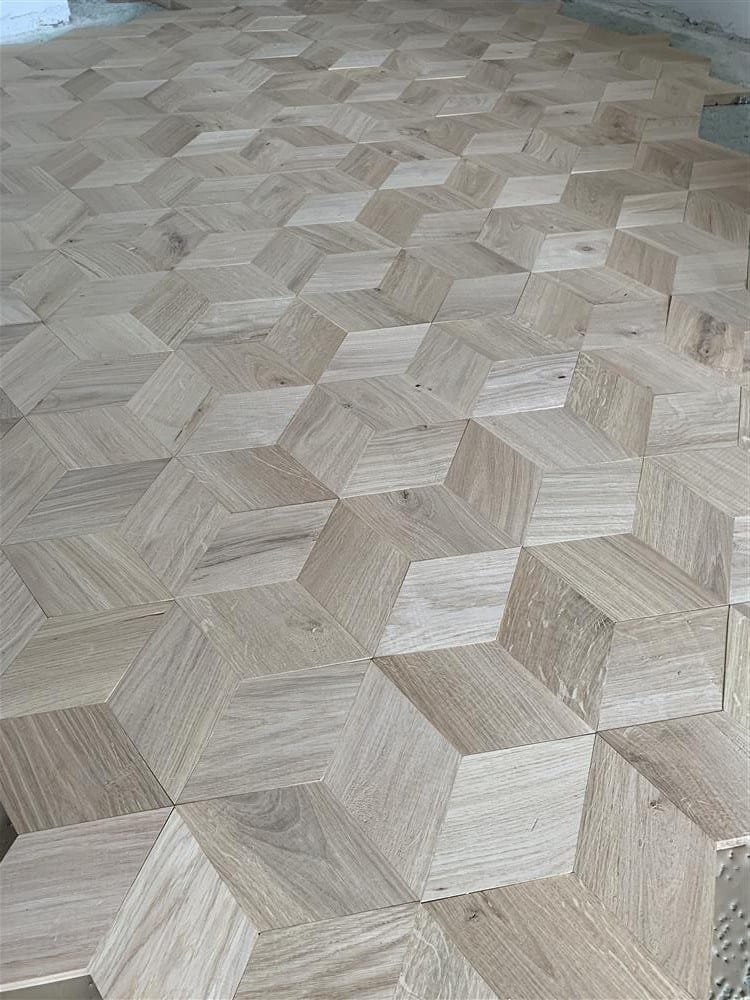
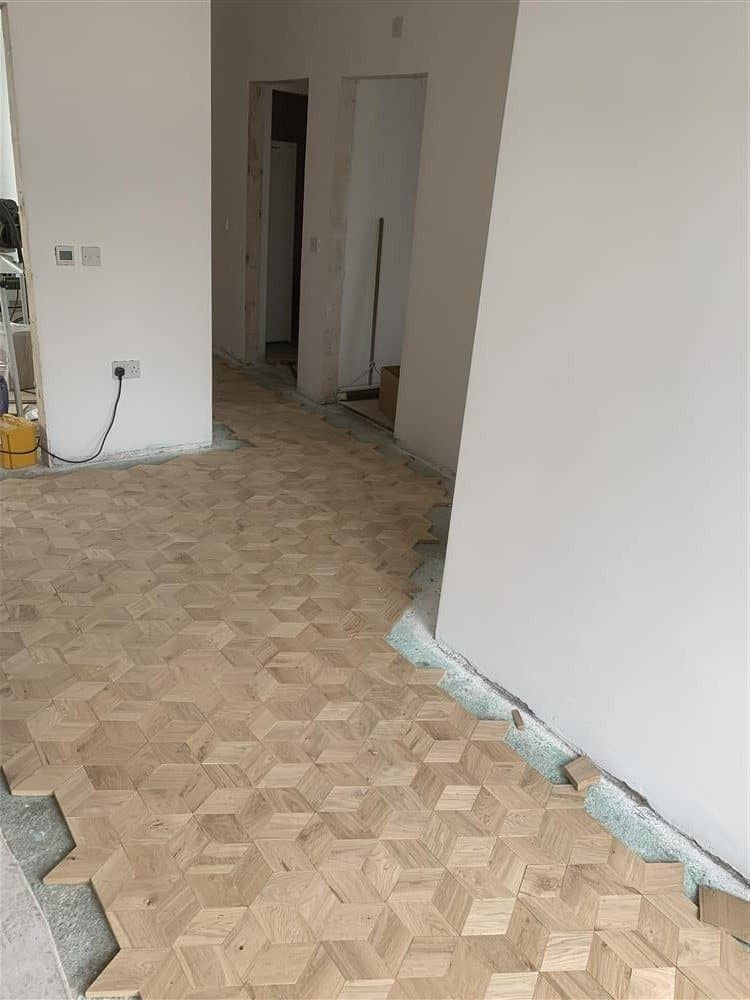
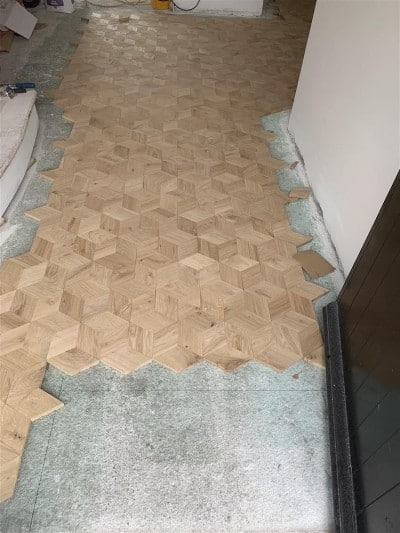
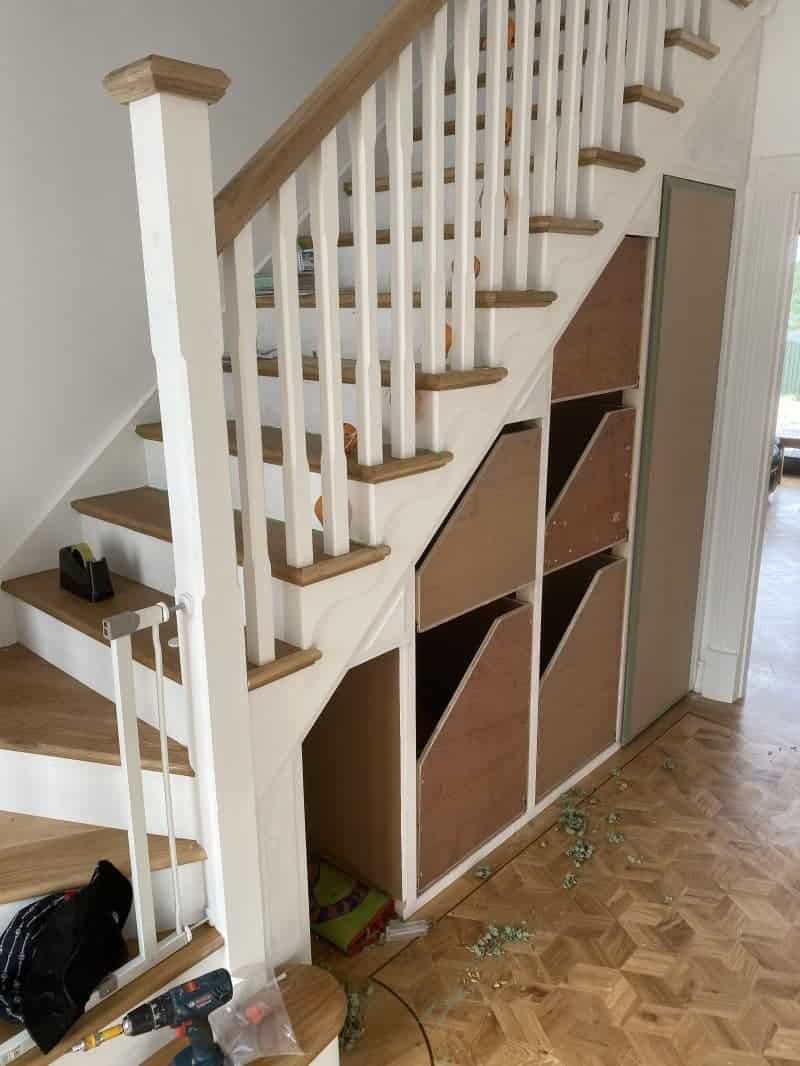
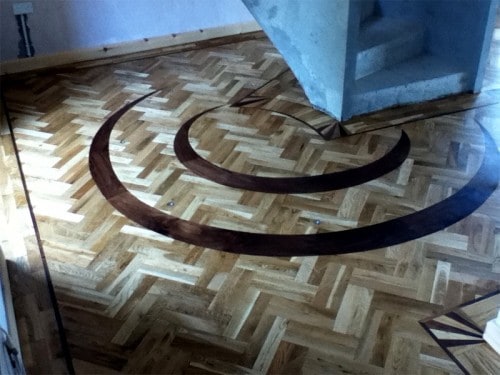
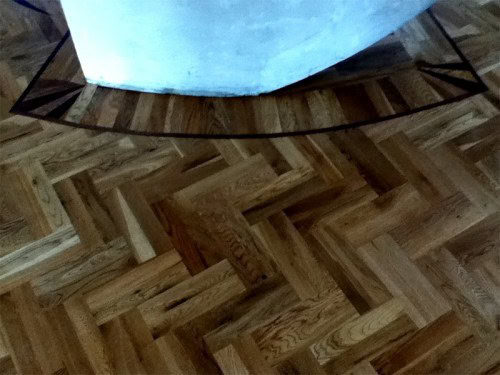
Mosaic Parquet Flooring: Timeless Style for Irish Homes
Some floors quietly go about their business. While others make you stop, crouch down, and look closer.
Mosaic parquet flooring has always been the latter. There’s something meditative about those small, precisely arranged timber fingers forming a pattern that’s both modest and magnificent. It doesn’t shout. It invites.
And right now, across Dublin, Leinster, and beyond, it’s being invited back in a big way. After decades spent hiding beneath carpets in period homes or being dismissed as a relic of the 1970s, mosaic parquet flooring is having a well-deserved renaissance.
Interior designers are championing it, heritage property owners are restoring original floors, and a new generation of homeowners is discovering it for the first time and falling completely in love.
At MM Parquet, mosaic parquet flooring is something we know intimately.
With over 35 years of experience laying, restoring, and finishing parquet floors across Ireland, we’ve seen mosaic flooring in its original glory, rescued it from decades of neglect, and installed it fresh in homes and commercial spaces from Ranelagh to Kilkenny.
In this guide, we’ll walk you through everything, from what mosaic parquet actually is to choosing the right timber, finish, and installer for your project.
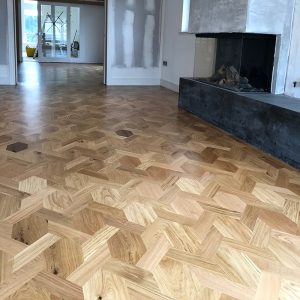
What Is Mosaic Parquet Flooring?
Picture a jigsaw puzzle made entirely of small, uniform timber fingers, and you almost understand how mosaic parquet works.
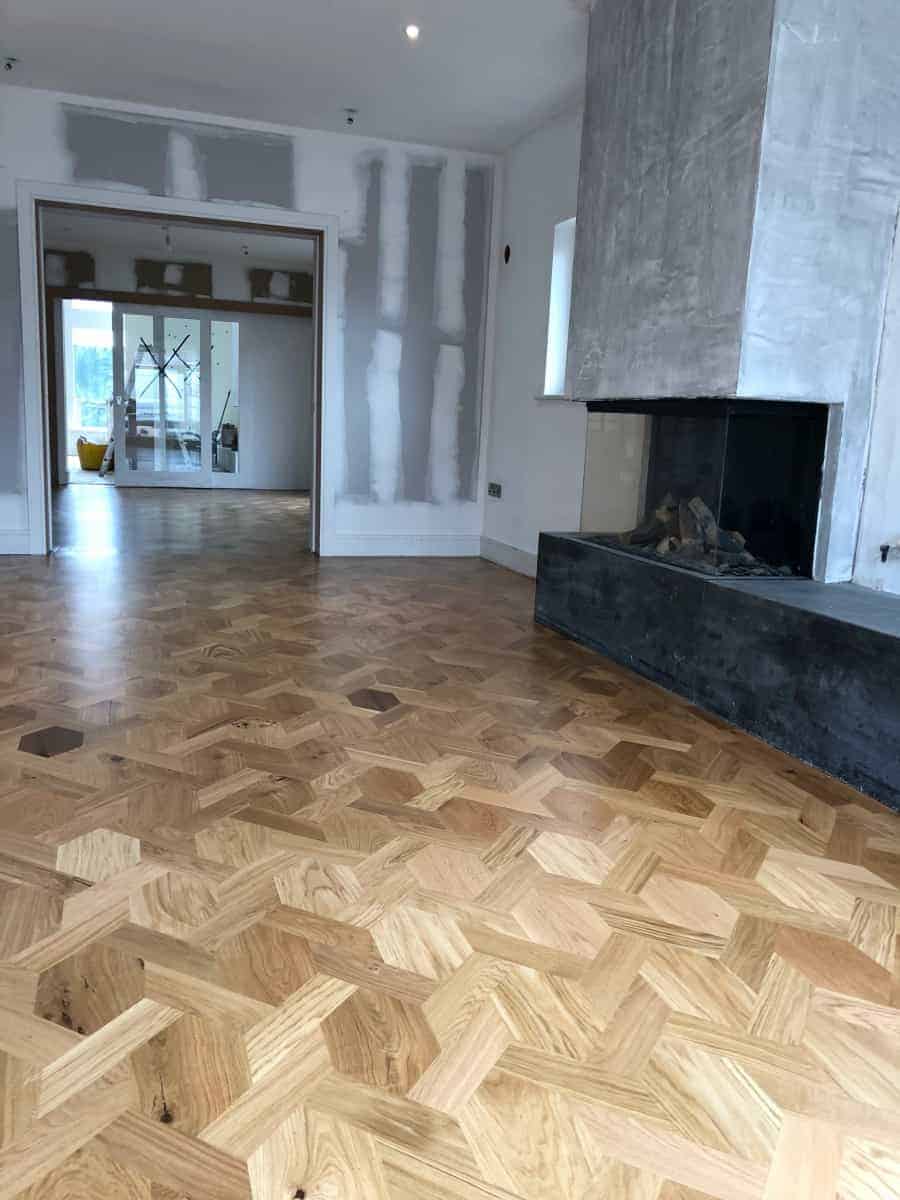
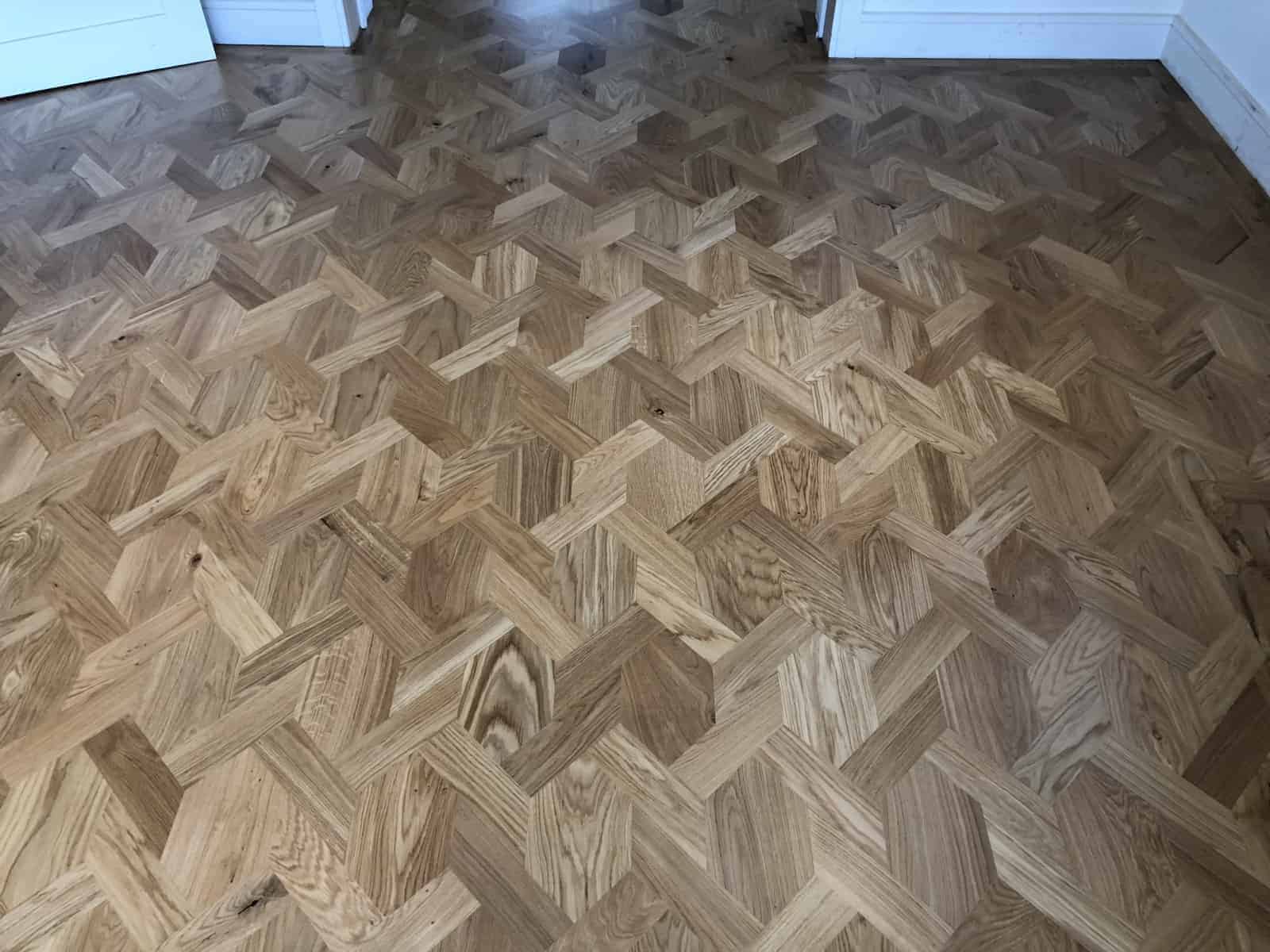
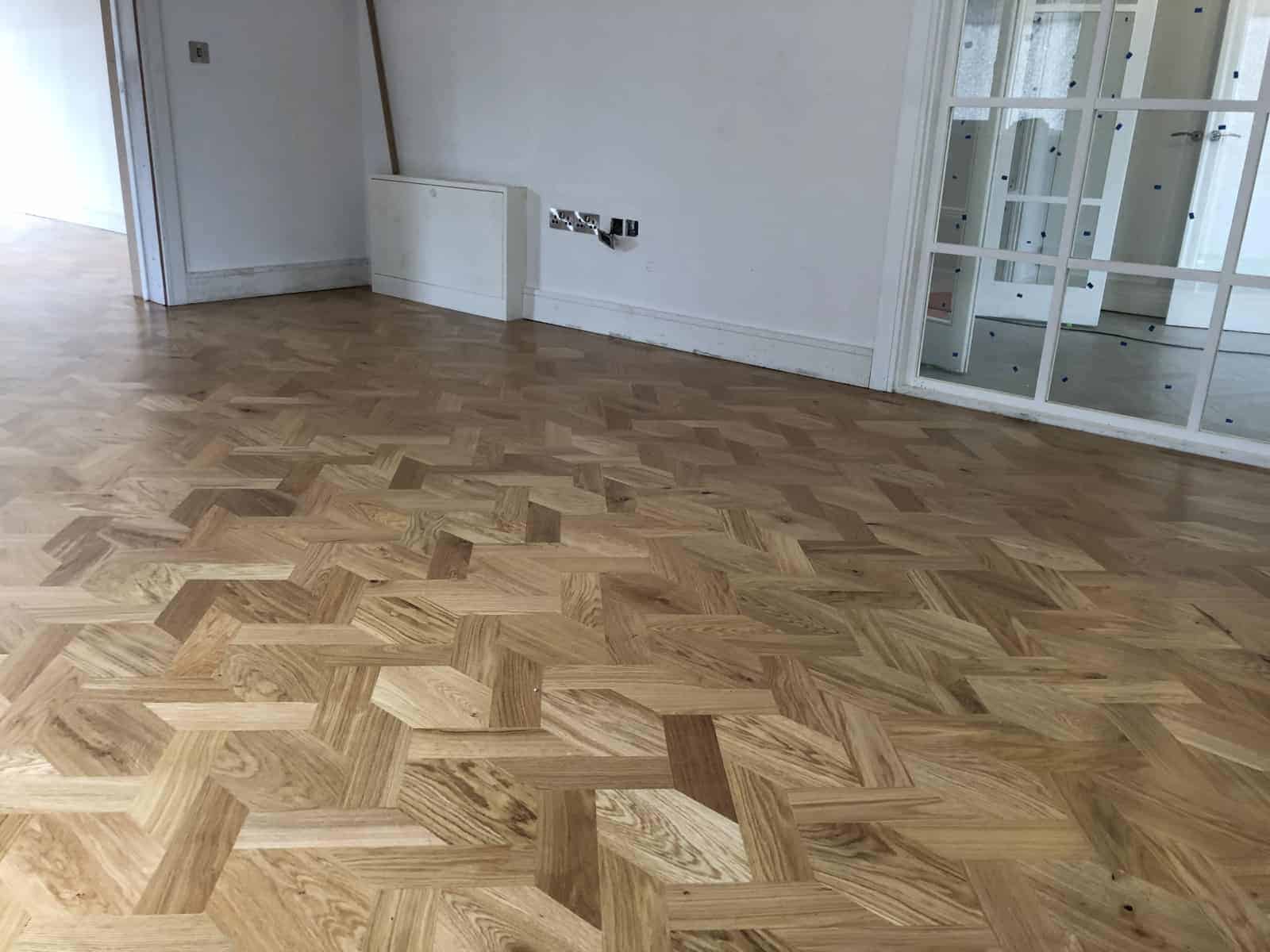
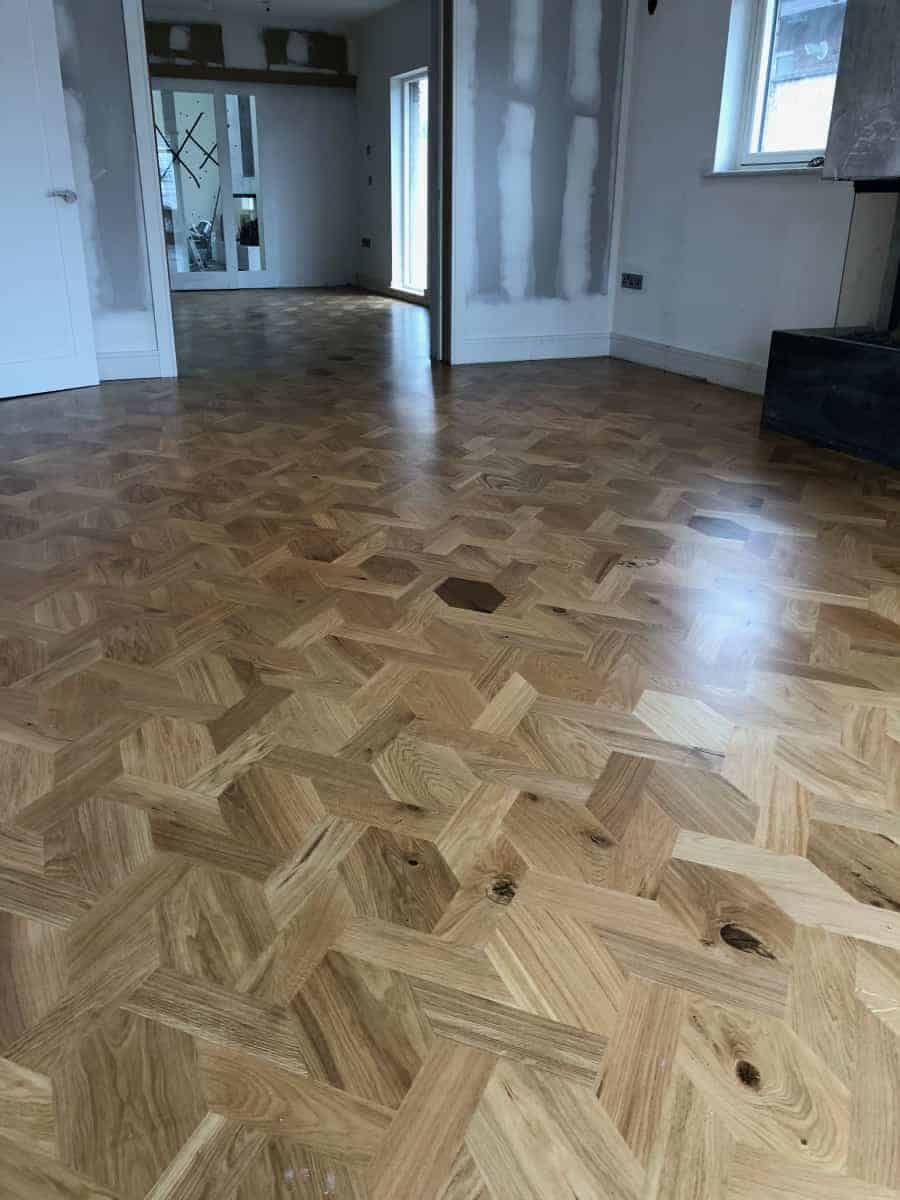
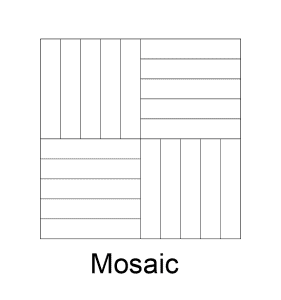
Each individual piece, known as a finger block, is a slim, rectangular strip of hardwood. These fingers are arranged side by side in alternating directions to form small square units, and those units are then laid in a repeating grid across the floor.
The result is a surface that’s dense with quiet detail: geometric, orderly, and deeply satisfying to look at.
What sets mosaic parquet flooring apart visually is its uniformity. Unlike herringbone or chevron, which create bold directional movement across a room, mosaic parquet creates an even, all-over texture that is more like a woven fabric than a dramatic statement.
In certain rooms and lighting, it almost seems to carry a gentle visual rhythm. It’s subtle in the best way.
Historically, mosaic parquet was very popular across Europe from the 1950s through to the 1970s, and Ireland was no exception. Countless homes built or renovated during that era had mosaic flooring laid in hallways, living rooms, and even kitchens.
Many of those original floors are still there today, waiting beneath carpets, quietly intact and restorable.
That heritage is a huge part of mosaic parquet flooring’s renewed appeal: it isn’t just a design choice, it’s a connection to the history of a home.
Mosaic Parquet vs Other Parquet Patterns
Every parquet pattern has its own personality. And, understanding the differences helps you make the right choice for your space, so let’s put them side by side for a moment.
Herringbone is bold and directional, drawing the eye along its V-shaped rows and creating a strong sense of movement. It’s the extrovert of the parquet family, brilliant in hallways and large open rooms where you want the floor to lead the way.
Chevron takes that energy and sharpens it, with precisely angled cuts that meet in a clean point, giving a more contemporary, graphic quality.
Basketweave is grounded and geometric, creating that satisfying interlocked pattern that feels at home in larger, more formal spaces.
Mosaic parquet is the quiet achiever of the group. Its grid-based, all-over texture means it doesn’t dominate a room, but enhances it.
Where herringbone creates drama, mosaic creates atmosphere. It’s the pattern that makes a room feel considered and complete without competing with the furniture, artwork, or architecture around it.
For spaces where subtlety is a virtue, mosaic flooring is usually the smartest choice in the room.
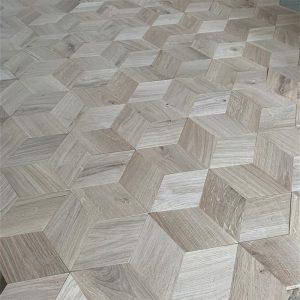
Best Rooms and Spaces for Mosaic Flooring
Not every pattern suits every space, but one of the things that makes mosaic parquet so versatile is that it thrives precisely where some other patterns struggle.
Hallways are a natural home for mosaic flooring. The compact finger blocks work beautifully in narrower spaces, and the non-directional pattern means it doesn’t visually shorten the corridor the way a strongly directional pattern can. It simply flows.
Smaller reception rooms and studies benefit from mosaic parquet’s understated quality. In a room that’s already full of character (original cornicing, a period fireplace, and tall sash windows), a busy floor pattern can cause visual overload. Mosaic flooring sits beneath all of that without competing with it.
For period property restorations across Dublin and Leinster, mosaic parquet is not just the best choice, it’s the historically correct one. Reinstating or restoring original mosaic floors in Victorian, Edwardian, or mid-century homes brings an authenticity that no other pattern can replicate.
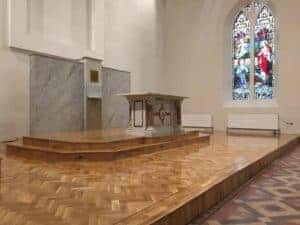
In commercial settings, mosaic parquet has a quiet authority that works well in offices, heritage buildings, boutique retail spaces, and anywhere that wants to communicate craftsmanship and quality. It’s the floor that says we have taste without needing to raise its voice.
And don’t overlook high-traffic areas. The small, tightly-packed finger blocks of a well-installed mosaic floor create a surface that distributes wear evenly and handles foot traffic with impressive resilience. This was one of the reasons it was so widely used in public and commercial buildings throughout the twentieth century.
Wood Species Options for Mosaic Parquet Flooring
Here’s where mosaic parquet flooring starts to feel personal. The timber species you choose will define the entire character of the finished floor.
Oak is the default choice. Its warm, honey-toned grain perfectly complements the geometric pattern of mosaic parquet. European oak in particular ages with grace, deepening and warming in tone over time in a way that only adds to its appeal.
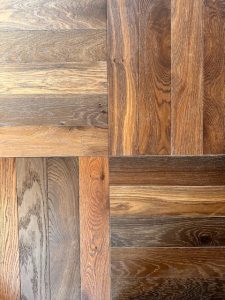
Teak brings a richer warmth and a naturally oily surface, making it one of the most durable choices available. Merbau offers deep reddish-brown tones with a bold grain, giving the mosaic pattern a more tropical warmth. Walnut (for those drawn to darker palettes) delivers rich chocolate tones and an even grain that makes the mosaic pattern look refined.
One of the most exciting possibilities with mosaic parquet is mixing species for contrast. For instance, alternating light oak fingers with darker walnut within the same panel creates a two-tone chequered effect within the mosaic grid, a bespoke result that’s genuinely striking.
At MM Parquet, this is something we love working through with clients who want a floor that’s completely their own.
Solid vs Engineered Mosaic Wood Flooring
It’s worth understanding the differences between solid and engineered mosaic wood flooring before you make any decisions.
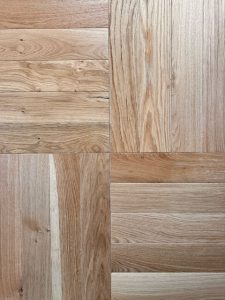
Traditional solid mosaic finger blocks are cut from a single piece of hardwood and are what you’ll find in most original period installations across Ireland. They’re between 8mm and 10mm thick (slimmer than other parquet formats), which makes them so well suited to spaces with lower ceiling heights or where floor-to-door clearances are tight.
Solid mosaic blocks can be sanded and refinished multiple times, making them a long-term investment. They do, however, require careful acclimatisation before installation and are not recommended over underfloor heating systems.
Engineered mosaic panels represent the modern evolution of the format. Here, the finger blocks are pre-assembled onto a backing panel in the factory, creating a tile-like unit that’s faster and more straightforward to install than loose individual blocks.
The engineered construction (which is a real hardwood top layer bonded to a stable core) means greater dimensional stability. This makes engineered mosaic panels a strong choice for the Irish climate, and they are fully compatible with underfloor heating systems.
For a period restoration where original solid blocks need to be matched, solid is almost always the right answer. But, for a new installation in a contemporary home with underfloor heating, engineered mosaic panels are more practical and cost-effective.
We’re always happy to talk this through in detail during a consultation.
Mosaic Parquet Flooring: Finishes and Customisation
A mosaic parquet floor without the right finish is like a painting without a frame: the craft is there, but the full picture isn’t complete yet.
The finish you choose affects not just how the floor looks, but how it feels, how it performs, and how easy it is to maintain over time.
Oil finishes are having a big moment in Irish interiors right now. An oiled finish penetrates the timber rather than sitting on top of it, enhancing the natural grain and warmth of the wood. It’s the finish that makes oak look most like oak. The ongoing commitment is a periodic re-oil (annually in most cases), but many people find this a small price to pay for a floor that looks this good.
Lacquer finishes build a protective layer on the surface of the timber, offering greater resistance to everyday wear and lower ongoing maintenance. A matt or satin lacquer can look natural; a gloss lacquer is more formal and reflective. For commercial mosaic installations or high-traffic residential areas, lacquer is the more practical long-term choice.
Beyond the base finish, stained and coloured treatments open up a world of creative possibilities. White-oiled or limed mosaic parquet has a Scandinavian quality: pale, calm, and full of light. Smoked or charcoal-toned finishes create a moody effect that’s especially striking in contemporary interiors.
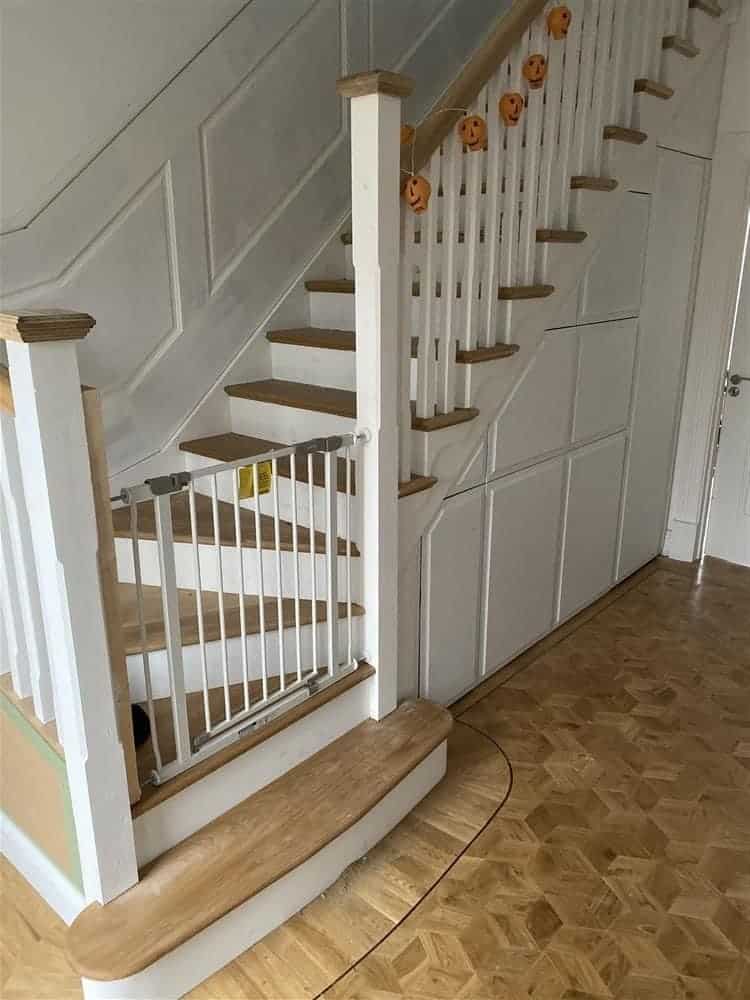
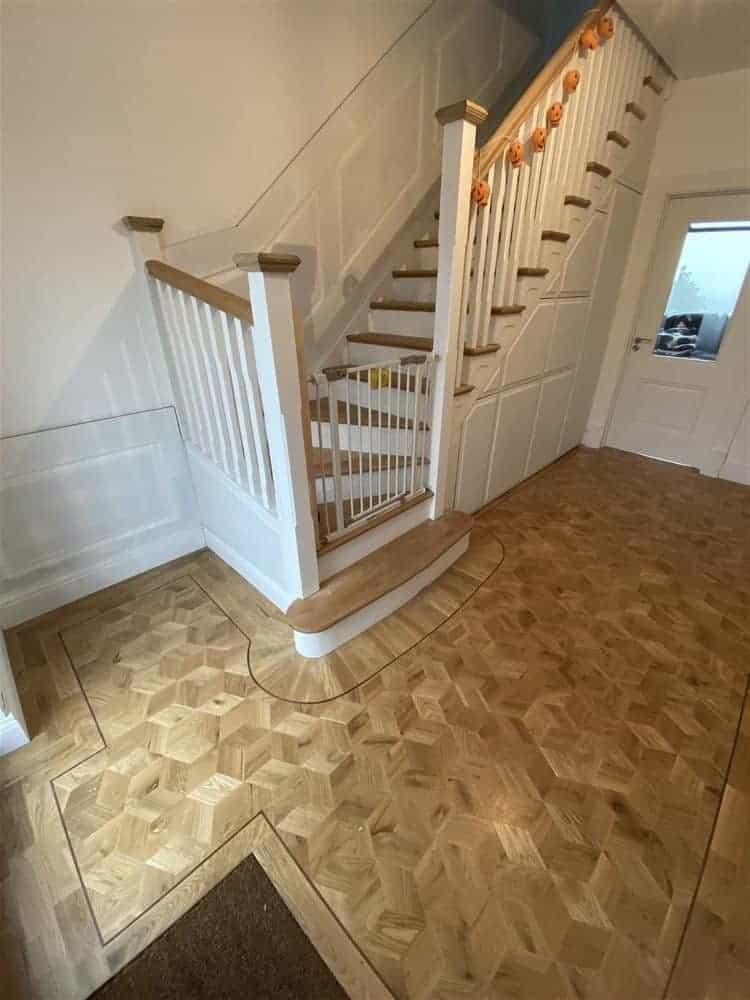
And then we have borders and feature strips. These are contrasting timber bands running around the perimeter of the mosaic field. They add a layer of interior architecture to the floor that truly elevates the whole room.
Restoring Existing Mosaic Floors
This is a section that’s close to our hearts at MM Parquet because there is something deeply satisfying about bringing an original mosaic floor back to life.
Across Dublin and Leinster, thousands of homes have mosaic parquet lying dormant beneath carpets, laminate, or vinyl.
Many homeowners are astonished to discover what’s underneath when they finally lift the covering: a floor that, despite decades of neglect, is structurally sound and restorable.
The restoration process usually begins with a thorough assessment of the existing floor. We check for loose, lifted, or missing blocks, identify areas of damp damage, and evaluate the overall condition of the surface.
Missing or damaged finger blocks can be replaced by sourcing matching timber, and loose blocks are re-adhered before any surface work begins.
Once the floor is structurally sound, sanding removes the old finish, any surface staining, and the top layer of aged timber to reveal the fresh, clean wood beneath. What looked like a tired, discoloured floor suddenly reveals rich grain and perfectly crisp geometry.
A fresh finish (oil or lacquer, depending on the client’s preference) then seals and protects the restored surface.
MM Parquet’s floor sanding and restoration service is one of the things we’re most proud of. There’s something irreplaceable about an original mosaic floor, and we believe it deserves to be saved wherever possible.
Installation Considerations For Mosaic Parquet Flooring
Mosaic flooring begins long before the first block is laid. Understanding what goes into a proper installation explains why choosing the right professional matters so much.
The subfloor is everything. It must be clean, dry, flat, and structurally sound. Any unevenness will show through the thin finger blocks of a mosaic floor more than the thicker parquet formats. Therefore, proper subfloor preparation, which includes grinding, levelling, and damp-proofing where needed, is non-negotiable. At MM Parquet, subfloor assessment is always the first conversation we have on any project.
Then, individual finger blocks are laid one by one using a flexible adhesive; this is a method that demands patience, precision, and experience. Pre-assembled engineered mosaic panels are faster to install and involve less manual placement, but we still make sure to carefully align the panels so the grid pattern flows correctly across the room and ends neatly at the perimeter.
Layout planning matters more than most people realise. The mosaic grid needs to be centred correctly in the room so that the cut pieces at the edges look intentional and balanced. Getting this wrong and rushing into the first course without proper planning is one of the most common causes of a mosaic floor that looks off, even when you can’t quite put your finger on why.
An experienced installer plans this meticulously from the outset. Every single time.
Mosaic Parquet Flooring: Maintenance and Care
The good news about mosaic wood flooring is that once it’s properly installed and finished, maintaining it is pretty straightforward, and the reward of doing so is a floor that only improves with age.
Day-to-day, a soft-bristle broom or microfibre dust mop is your best friend. Grit and fine particles are the primary cause of surface scratching on any timber floor, so removing them regularly makes a big difference. Avoid hard-wheeled vacuum cleaners or beater bar attachments directly on the surface.
For cleaning, use a barely damp mop (never wet) with an appropriate cleaning solution. Standing water and mosaic parquet do not get along. The slim profile of the finger blocks means moisture can work its way between them more readily than with thicker formats, so keeping liquid away from the surface is important.
Long-term, your maintenance schedule depends on your finish. Oiled floors require an annual re-oil to keep the timber nourished and protected. Lacquered floors need less attention but will eventually need professional sanding and refinishing if the surface becomes worn; with a quality installation, this is usually a long way off.
Felt pads under furniture legs, a good doormat at every entrance, and the occasional rug in the highest-traffic zones, these three habits alone will extend the life and beauty of your mosaic parquet floor.
Mosaic Flooring Costs: What to Expect
Mosaic parquet flooring is an investment in the truest sense, one that adds lasting value to a property and delivers pleasure for decades. That said, understanding what drives the cost can help you plan your project with confidence.
Timber species is one of the biggest variables. Oak mosaic flooring sits at the more accessible end of the price spectrum; walnut, teak, and more exotic hardwoods command a premium that reflects their rarity and character.
Solid vs engineered construction also affects the overall cost, as does the thickness and quality of the boards.
As a general rule, engineered mosaic panels tend to be the more budget-friendly option; the pre-assembled panel format reduces installation time and labour cost. Solid finger block flooring, laid individually by hand, is more time-intensive to install and therefore carries a higher price. That said, solid flooring can be refinished more times over its lifetime, so the long-term cost per year of use often balances out.
Optional design details can add to your investment. For example, adding a border (a neat band of contrasting timber around the edge of the room to frame the mosaic pattern) or a feature strip between zones instantly elevates the floor from beautiful to extraordinary. These details are optional, but once you’ve seen them done well, they’re hard to unsee.
Subfloor preparation is a cost you need to budget for properly. If your subfloor needs levelling, damp treatment, or structural attention, this work is what protects everything that goes on top of it.
For restoration projects, the condition of the existing floor determines the scope of work, and therefore the cost. A floor that needs only light sanding and refinishing is a very different project from one that requires block replacement and subfloor repair. A site visit and honest assessment is always the starting point.
The most accurate way to understand the cost for your project is a personalised quote, and at MM Parquet, we make that process as transparent as possible.
Get in touch with MM Parquet today for your no-obligation quote.
A Floor With a Story Worth Telling
Mosaic parquet flooring has an enduring charm that very few other floor coverings can match.
It’s a pattern that brings warmth and craft to a room without overwhelming it, and it only improves with age in the hands of people who care for it properly.
Whether you’re restoring an original mosaic floor in a period Dublin home, installing fresh mosaic parquet in a new-build in Kildare, or bringing it into a commercial space in Leinster, mosaic wood flooring is a choice that will serve you beautifully, for a very long time.
At MM Parquet, we bring over 35 years of expertise, deep passion for the craft, and a respect for the material to every mosaic project we take on. We’d love to be part of yours.
Book your free consultation with MM Parquet today, and let’s find the perfect floor for your space.
MM Parquet – Crafting Exceptional Parquet Floors Across Dublin, Leinster & Beyond for Over 35 Years.
Gallery