The Ultimate Guide to Basketweave Parquet Flooring for Irish Homes
There’s something about a beautifully laid timber floor that stops people in their tracks. But, not just any floor, one that tells you a skilled craftsperson was here and that thought and artistry went into every plank.
Basketweave parquet flooring does exactly that. It’s a pattern with roots that stretch back centuries, yet it still feels relevant and desirable today. Perhaps even more so, as homeowners and interior designers across Ireland are increasingly looking for something with personality and lasting appeal.
What’s driving the renewed love for basketweave flooring is the fact that people want warmth, craftsmanship, and depth again, rather than the grey-toned plank that dominated Irish interiors for a decade. They want a floor that becomes the feature, not just the backdrop. And basketweave parquet delivers in a way that few other patterns can match.
At MM Parquet, we’ve been laying parquet floors across Dublin, Leinster, and the surrounding counties for over 35 years. We’ve watched trends come and go, and basketweave parquet has never truly left. It just keeps finding new homes, from Georgian townhouses in Ranelagh to open-plan new builds in Kildare.
In this guide, we’ll walk you through everything you need to know about this timeless pattern, from how it’s constructed to what it costs, so you can decide whether it’s the right choice for your space.
What Is Basketweave Parquet Flooring?
Understanding basketweave parquet starts with how it’s built.
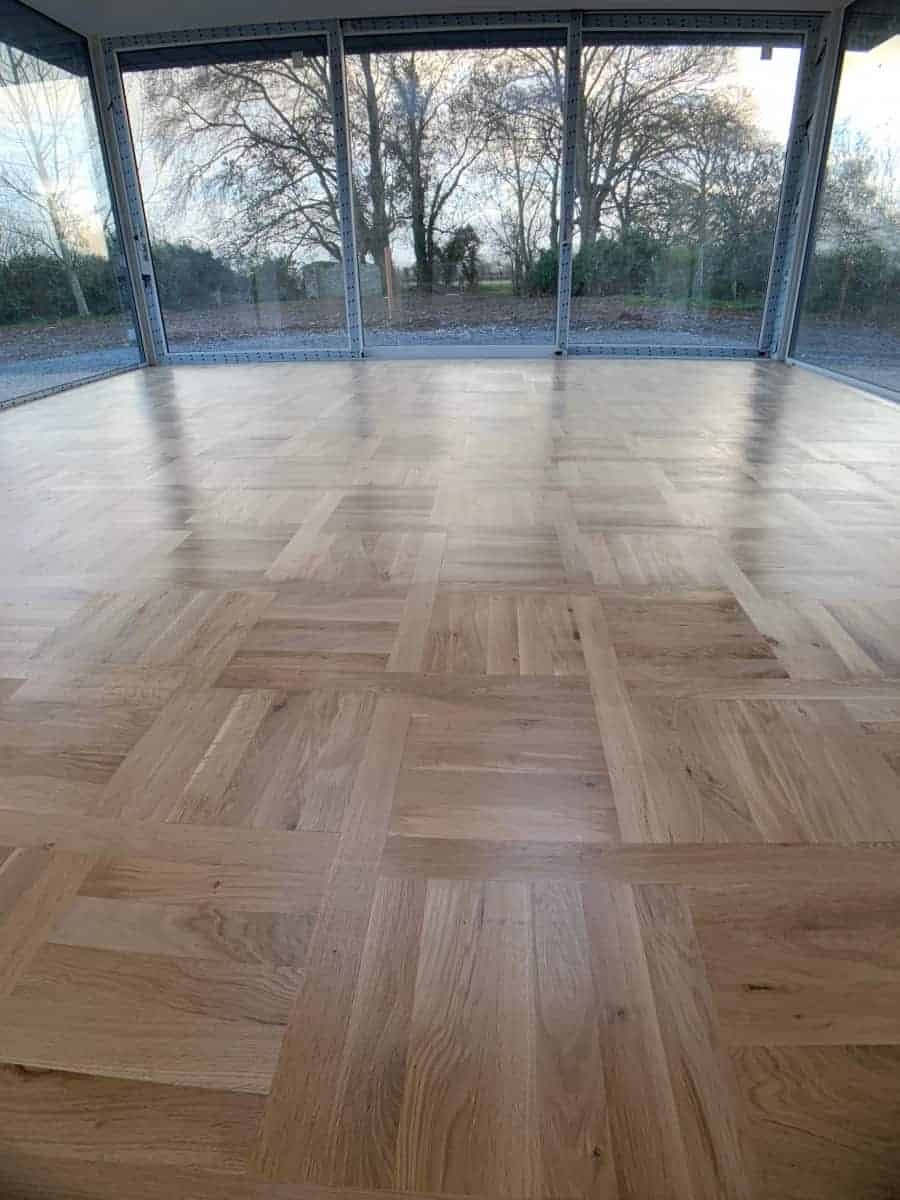
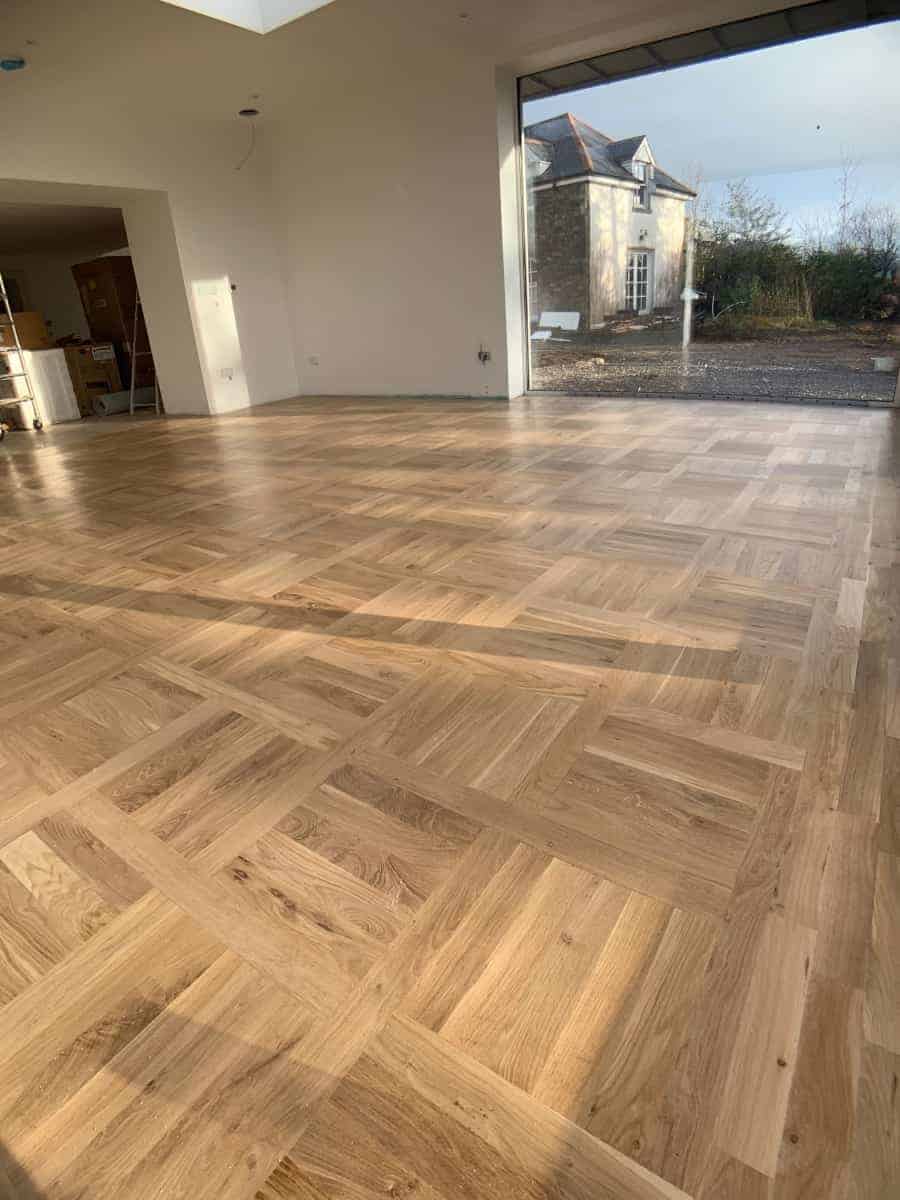
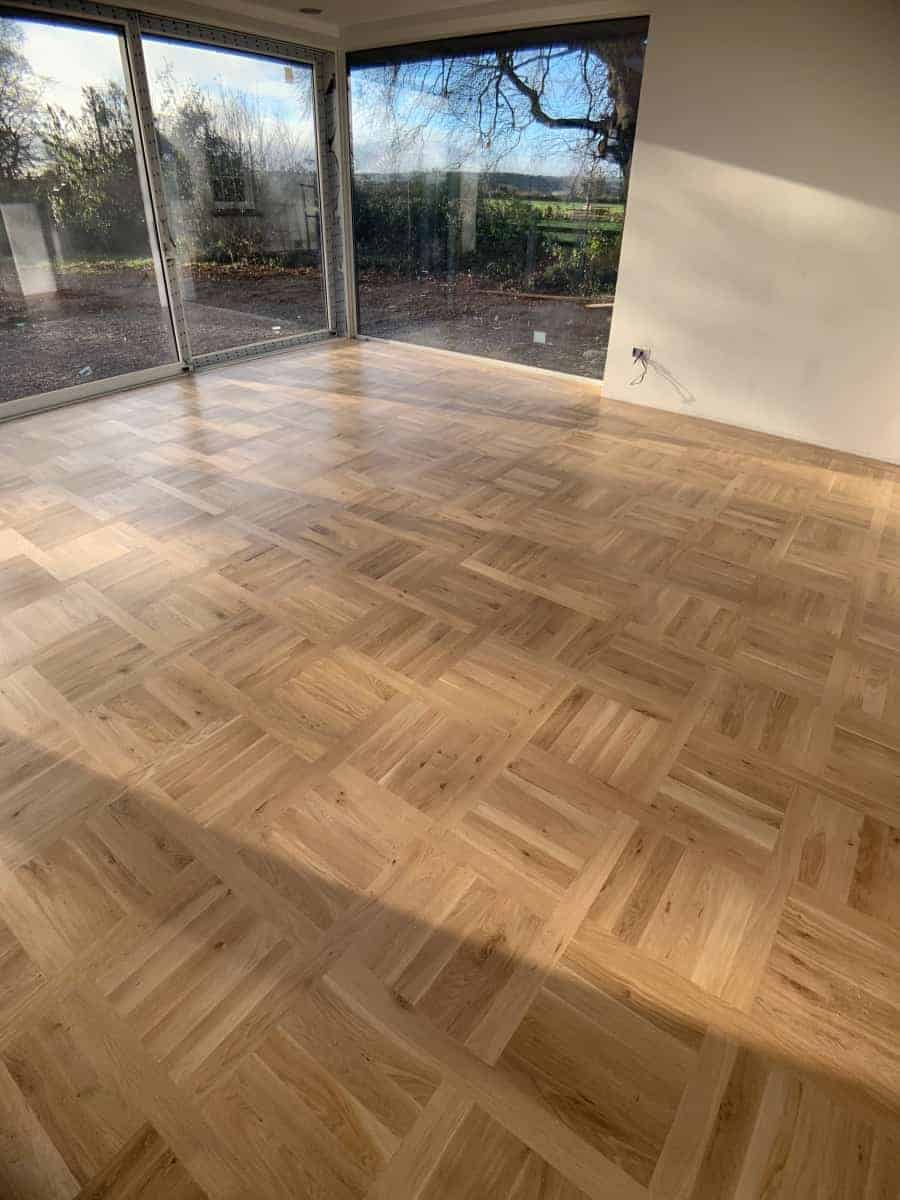
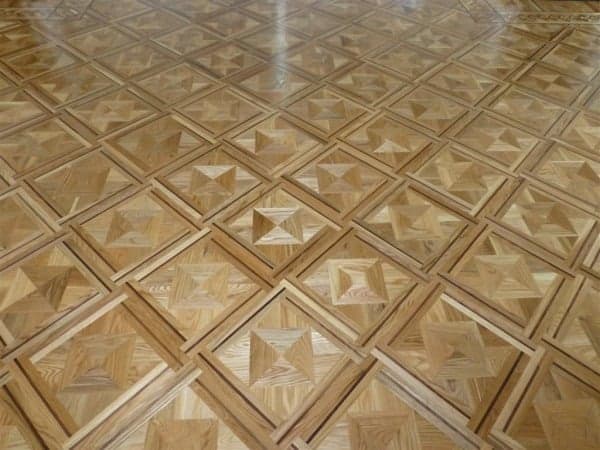
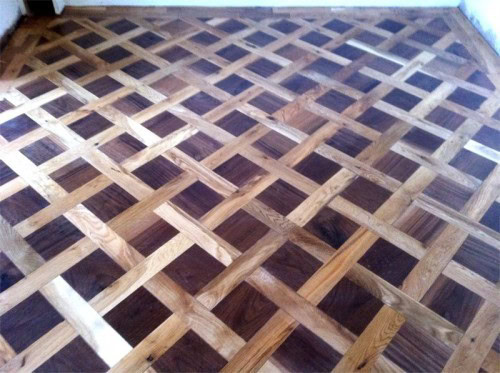
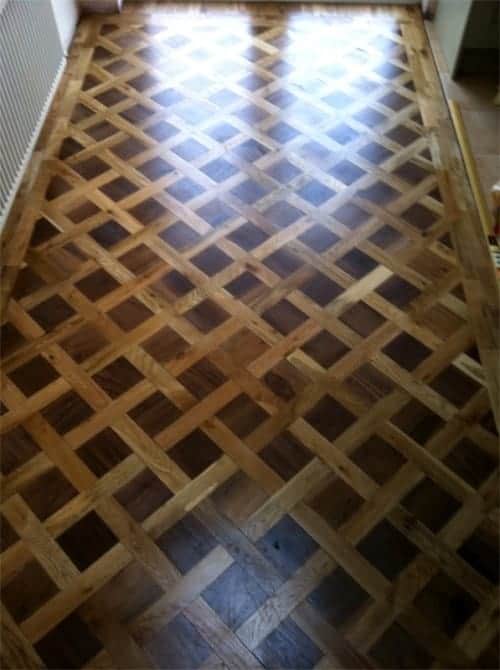
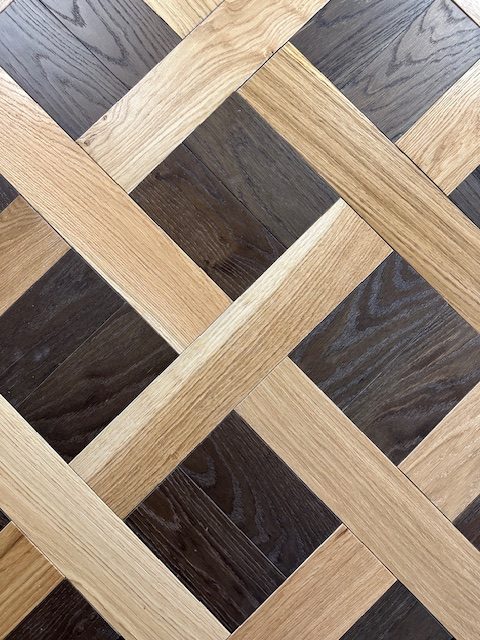
The pattern is created by arranging small timber blocks (usually rectangular) in alternating groups, where one cluster runs horizontally, and the adjacent cluster runs vertically. The result is a repeating interlocked design that mimics the over-under weave of a woven basket. Hence the name.
What makes this pattern so visually appealing is the way it plays with light and shadow. Because alternating blocks run in different directions, they catch light differently, creating a subtle but constant interplay of tone and texture across the floor surface.
Walk across a basketweave parquet floor in the afternoon sun, and you’ll notice it seems to shift and shimmer. It has visual depth in a way that a straight-laid plank simply cannot replicate.
Historically, this pattern has been gracing the floors of fine homes and public buildings for centuries. It was a favourite in Georgian and Victorian-era architecture, prized precisely because it demonstrated both the quality of the timber and the skill of the craftsperson installing it.
That heritage is a large part of its appeal today. You’re not choosing a trend, you’re choosing a tradition. And there’s a quiet confidence in that.
Basketweave vs Other Parquet Patterns
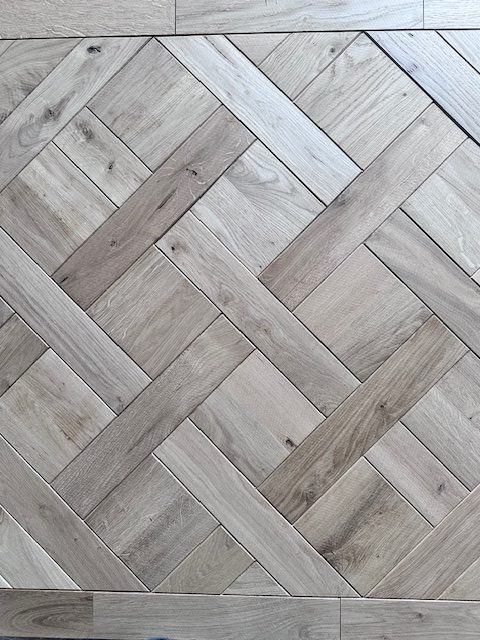
Parquet flooring comes in several well-known configurations. Herringbone, chevron, mosaic, and basketweave are among the most popular, and each creates an entirely different atmosphere the moment you step inside a room.
Herringbone Parquet Flooring
Herringbone is perhaps the most widely known parquet pattern, with its signature V-shaped interlocking rows. It’s dynamic, directional, and works brilliantly in hallways or rooms where you want to create a sense of movement leading the eye forward.

Chevron Parquet Flooring
Chevron is herringbone’s more precise cousin. The blocks are cut at an angle so they meet in a clean point, giving a sharper, more contemporary look.

Mosaic Parquet Flooring
Mosaic parquet tends to use smaller, finer blocks, often set within a grid, and works well in smaller areas or as a feature within a larger floor.
Basketweave Parquet Flooring
Basketweave parquet, by contrast, is more geometric and symmetrical. Where herringbone feels directional, basketweave feels settled and grounded.
It draws the eye in rather than leading it anywhere specific. This makes it particularly well-suited to larger, open spaces where you want the floor to be a presence without competing with the architecture. It holds its own in a big room in a way that some other patterns struggle to do.
Best Rooms and Spaces for Basketweave Flooring
One of the most common questions we hear at MM Parquet is: Where does basketweave parquet work best? And the honest answer is at home, where it has room to breathe.
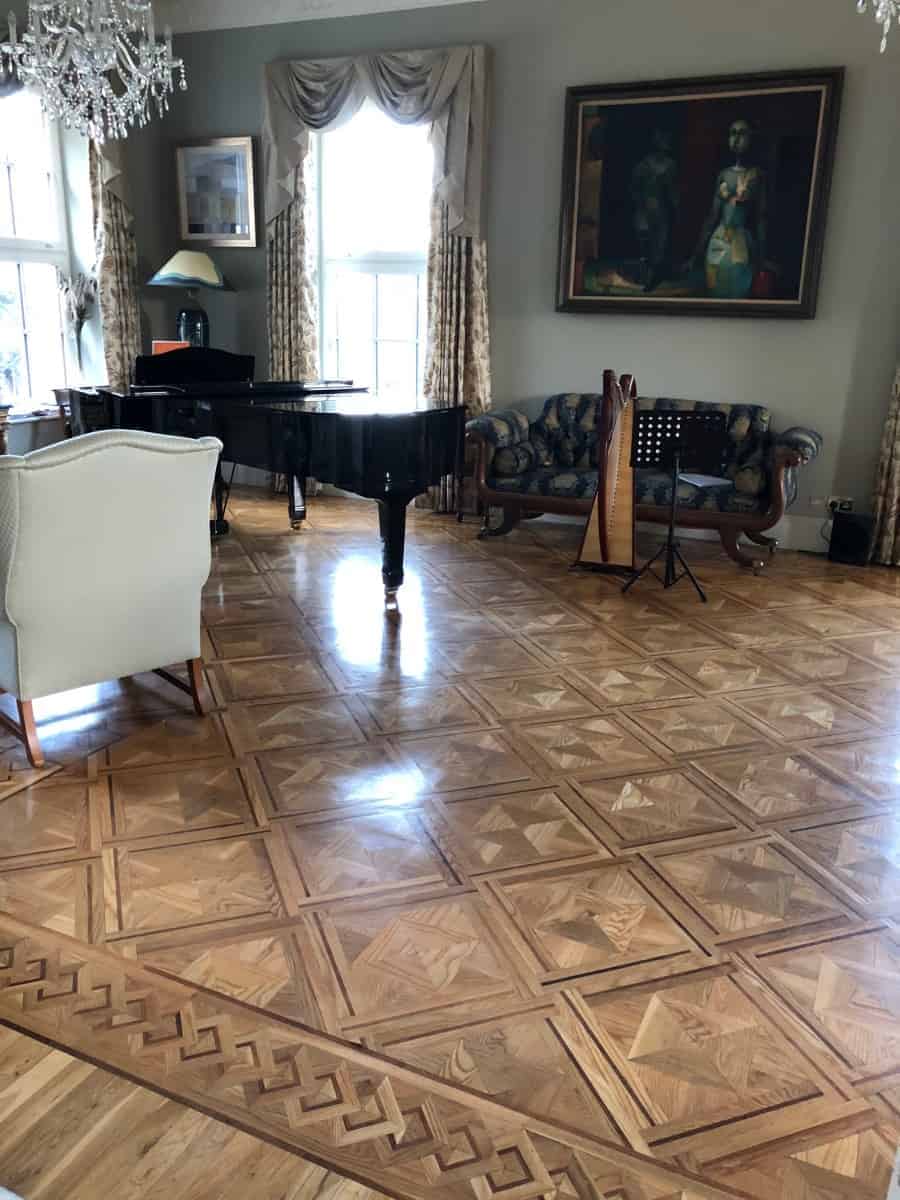
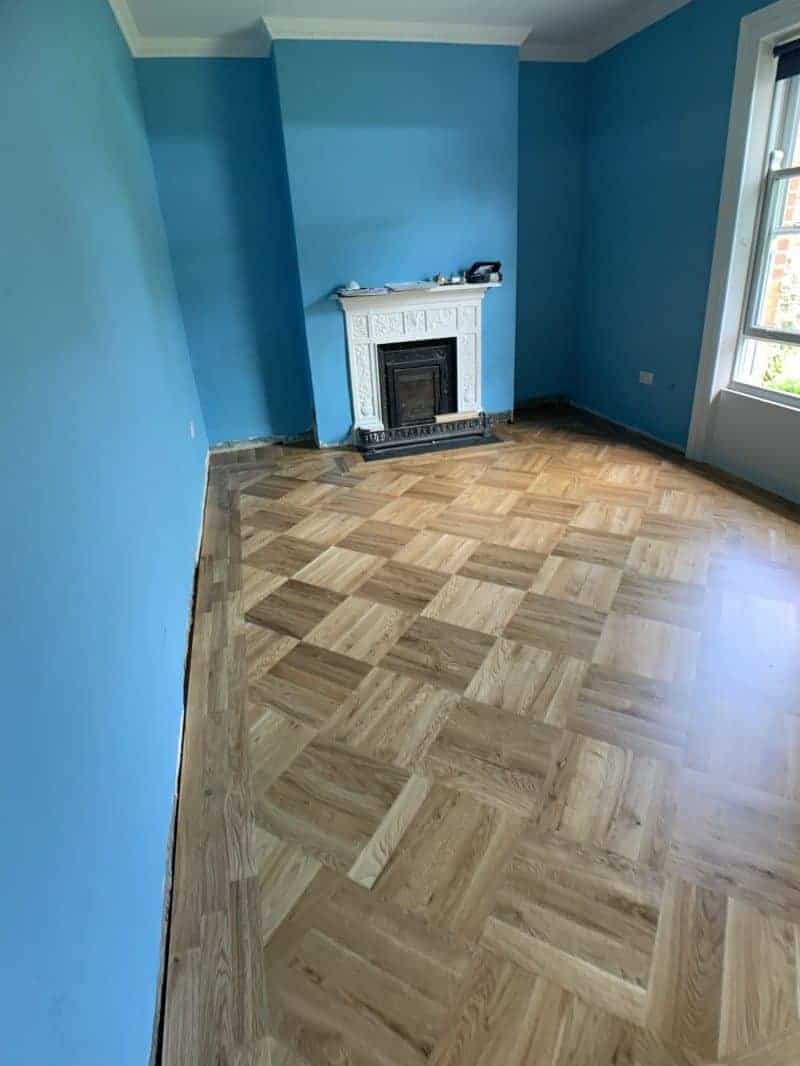
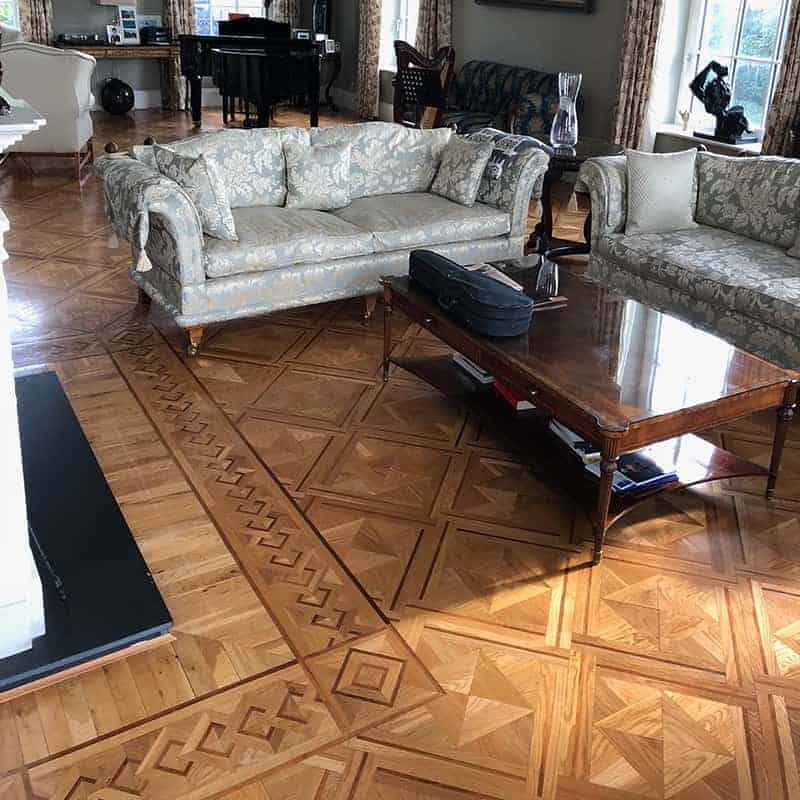
Large living rooms and lounges are a natural fit. The pattern’s geometric repetition becomes truly impressive when you can see it extend across an expansive floor. In a compact room, the intricate weave can feel a little busy. But in a spacious room, it’s magnificent.
Entrance halls and lobbies (both residential and commercial) are another excellent application. This is the floor your guests see first and the one that sets the tone for everything that follows. Basketweave parquet makes a statement that’s confident without being loud.
In the commercial world, restaurants, boutique hotels, and high-end retail spaces across Dublin and beyond have embraced basketweave parquet because it communicates quality and heritage instantly. Customers notice it, even if they can’t always name what they’re looking at.
For residential settings, it’s worth thinking about the scale of the room before committing. An open-plan kitchen-diner in a modern Kildare or Wicklow home? Perfect. A small third bedroom? Perhaps not where basketweave will shine brightest. You might get more impact from herringbone or a simpler strip floor in that context.
Wood Species Options
This is where your basketweave parquet truly becomes yours. The pattern is the structure; the timber species is the personality.
Oak
Oak remains the most popular choice in Ireland, and for good reason. It’s abundant, durable, absorbs stains, and finishes beautifully. And, its warm honey tones feel perfectly at home in both traditional and contemporary Irish interiors. European oak, for instance, has a character that never goes out of fashion.
Walnut
Walnut brings rich, dark chocolate tones and a luxurious grain that adds drama and depth. It’s the choice for those who want something special. It works especially well in formal dining rooms or high-end commercial spaces.
Teak, Mahogany, and Maple
Teak and mahogany offer their own distinctive warmth: reddish-brown tones with a natural lustre that ages beautifully over time. Maple goes in the opposite direction, offering creamy tones that feel light and airy, excellent for brightening a room that doesn’t get a great deal of natural light.
Ash, Merbau, and Wenge
Ash has a pronounced grain and a lighter palette, sitting somewhere between oak and maple. Merbau brings deep, reddish warmth and excellent durability, while wenge (for those who want to make a bold statement) delivers almost ebony darkness with a striking straight grain that makes the basketweave pattern graphic and contemporary.
When choosing your timber, think about three things: the natural light in the room, the colour palette you’re working with, and how much foot traffic there will be.
Harder, denser timbers like teak and oak handle heavy use better. Lighter, softer species like maple may require more careful maintenance in high-traffic areas.
Solid vs Engineered Basketweave Flooring
This is one of the most important practical decisions you’ll make, and it’s one where we always take time with our clients at MM Parquet to ensure they make the right choice for their home and circumstances.
Solid Basketweave Parquet
Solid basketweave parquet is exactly what it sounds like: blocks of timber cut from a single piece of wood, through and through. It typically comes in thicknesses of 16mm to 22mm. The great advantage of solid parquet is longevity: it can be sanded and refinished multiple times over its lifetime, making it a well-maintained solid floor that can last generations.
The consideration is that solid timber moves with changes in humidity and temperature, so it needs to be properly acclimatised before installation and is generally not recommended directly over underfloor heating systems.
Engineered Basketweave Parquet
Engineered basketweave parquet uses a real hardwood top layer bonded to a stable core of cross-layered timber or plywood. This makes it more dimensionally stable, meaning it handles the temperature fluctuations (which is common in the Irish climate) more gracefully than solid wood.
Engineered parquet ranges from 14mm to 18mm in thickness, and it is compatible with underfloor heating systems, a major consideration for Irish homes where underfloor heating is increasingly common.
In many cases, engineered basket weave parquet is the more practical choice for the Irish climate. You get the beauty of real hardwood with greater resistance to the swelling and shrinking that our damp winters can cause. That said, solid parquet remains the gold standard for those who want authenticity and long-term refinishing potential.
Finishes and Customisation
Here’s where the craft really comes alive. The same basketweave floor in oak can look completely different depending on the finish applied. At MM Parquet, we love working with clients to find the perfect combination.
Matt satin oil finishes are having a moment right now, and it’s not hard to see why. An oiled floor has a natural appearance that enhances the grain and warmth of the timber without creating the high-gloss sheen that some find cold or clinical. Oiled floors are also easier to repair in spot form. A small scratch can be treated locally without refinishing the whole floor. The trade-off is that oiled floors require periodic re-oiling to maintain their protection.
Lacquered finishes provide a harder, more durable surface layer and require less ongoing maintenance than oil. A matt or satin lacquer can still look natural; a high-gloss lacquer creates a more formal, polished appearance. For commercial applications, like restaurants, hotels, and office lobbies, a quality lacquer finish is usually the more practical choice.
Beyond the base finish, there’s a world of custom colour treatments available. White-washed or limed oak, charcoal-toned or smoked finishes, aged and distressed effects, all of these can be applied to basketweave parquet to create something entirely bespoke.
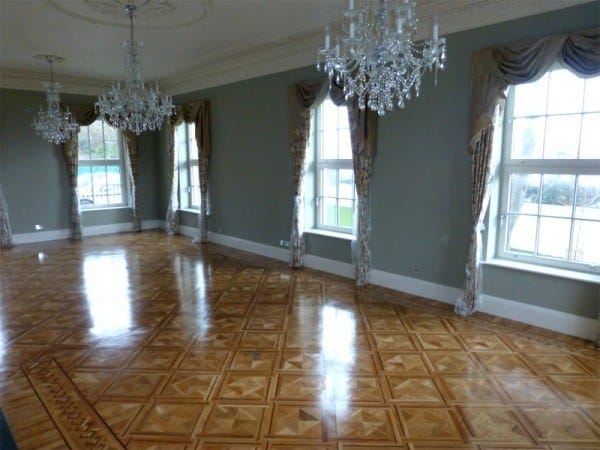
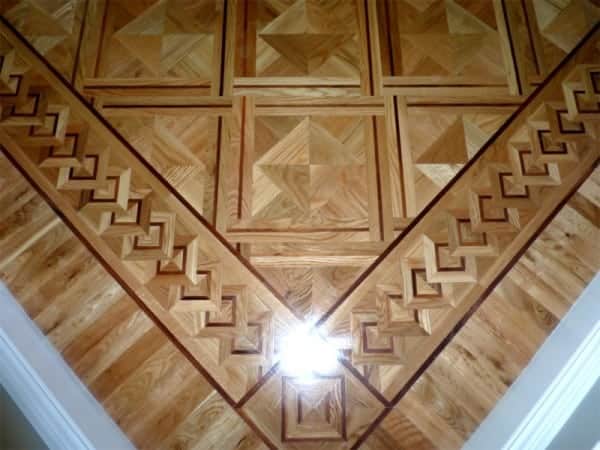
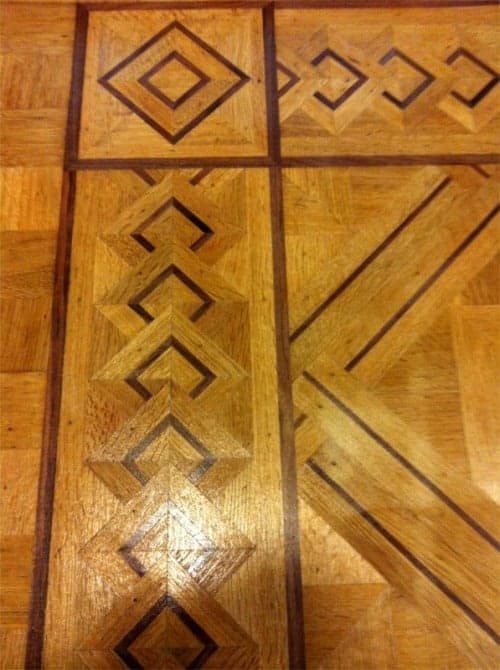
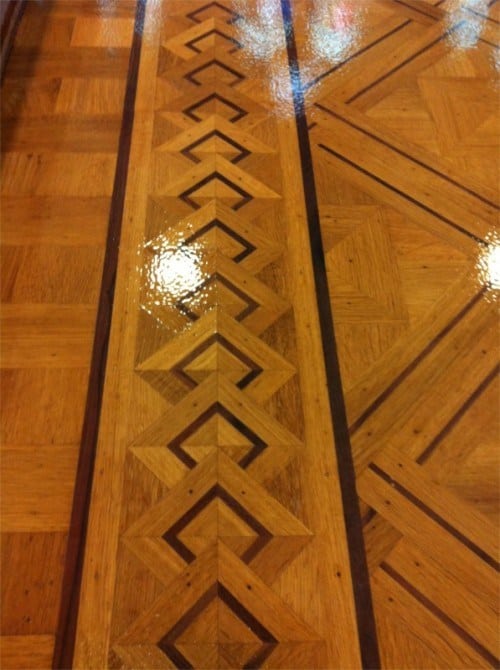
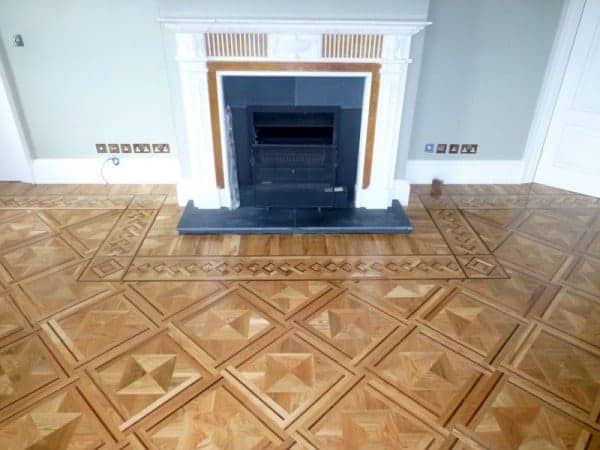
And then there are borders and inlays. A well-designed border running around the perimeter of a basketweave parquet floor in a contrasting timber species is one of those finishing details that elevates a beautiful floor into something extraordinary. It frames the pattern, defines the space, and adds a layer of craftsmanship that guests will admire for years.
Installation Considerations
No matter how beautiful the timber or how skilled the design, a basketweave parquet floor is only as good as the installation beneath it. You shouldn’t attempt installation as a DIY project, and here’s why.
The subfloor must be perfectly flat and smooth. Any undulation, high spot, or dip in the subfloor will come through the parquet blocks over time, potentially causing movement, squeaking, or uneven wear. A professional installer will assess the subfloor, grind down any high spots, and level any dips before a single block is laid.
Basketweave parquet is almost always installed using a glue-down method, where each block is individually adhered to the subfloor using a flexible timber adhesive. This provides stability and eliminates the micro-movement that can occur with a floated installation. The glue-down method is also the required approach for installations over underfloor heating.
The intricate geometry of the pattern means that layout planning is critical before installation begins. The pattern needs to be centred correctly in the room, and the mathematics needs to work out so that the cut pieces at the perimeter look deliberate and balanced rather than awkward. An experienced parquet installer will plan this carefully from the outset.
It’s also worth noting that the acclimatisation of the timber is essential. Solid and engineered parquet blocks need to spend time in the room where they’ll be installed before fitting begins, adjusting to the ambient temperature and humidity. Skipping this step is a common cause of problems down the line. At MM Parquet, this is never something we rush.
Maintenance and Care
The good news about basketweave parquet flooring is that, once properly installed and finished, it’s robust and relatively straightforward to maintain. A few simple habits will keep it looking its best for decades.
Daily care is simple:
- Sweep or dust-mop regularly to remove grit and dirt, which are the main culprits for surface scratching over time. A soft-bristle broom or a microfibre mop head is ideal. Avoid vacuum cleaners with hard plastic wheels or beater bars, which can scratch timber surfaces.
- For wet cleaning, use a well-wrung, barely damp mop rather than a wet one. Standing water is the enemy of timber flooring. It can cause swelling, staining, and in extreme cases, damage to the finish. Use a timber-specific cleaning product diluted to the manufacturer’s recommendation, and never use steam mops on parquet.
Long-term maintenance depends on your finish:
- Oiled floors will benefit from an annual re-oil to replenish the protective layer and maintain that beautiful natural lustre. Lacquered floors are lower maintenance, but they will require professional sanding and refinishing if they become scratched or worn in high-traffic areas.
- Place felt pads under furniture legs, use door mats at external entrances to capture dirt and moisture before it reaches the floor, and consider protective rugs in the highest-traffic zones. These small measures make a big difference.
Basketweave Flooring Costs: What to Expect
We know this is often the first question people want to ask, and we believe in being straightforward about it: basketweave parquet flooring is an investment.
It is not the cheapest flooring option on the market, and it was never meant to be. But it is, without question, one of the most enduring and value-adding choices you can make for a property.
The cost of a basketweave parquet floor will vary based on several factors:
- Timber species have an impact on the price. Oak is typically the most accessible price point; rarer or more exotic timbers like walnut, wenge, or teak command a premium.
- Solid vs engineered construction will also affect the price, as will the overall thickness of the board.
- Subfloor preparation is a cost that’s often overlooked but should never be skimped on. If your subfloor needs levelling, grinding, or damp-proofing, this is essential work that protects your investment.
- The complexity of the installation, including any borders, inlays, or especially intricate design elements, will naturally add to the overall cost. Labour from experienced parquet specialists is, frankly, worth every cent. A basketweave floor laid by someone who does this every day will look better and last far longer than one rushed through by someone inexperienced.
The best way to understand the cost for your specific project is to get a personalised quote. At MM Parquet, we offer detailed, transparent quotes with no hidden surprises. We’re always happy to talk through options at different price points to find the right balance for your budget and your brief.
Contact MM Parquet today for your quote.
Basketweave Parquet: A Floor That Lasts A Lifetime
Basketweave parquet flooring occupies a rare and special position in the world of interior design: it’s rooted in centuries of tradition, but also completely at home in a contemporary Irish setting.
It brings warmth, texture, craftsmanship, and a quiet sense of luxury to any space it inhabits. And, it does so for a lifetime, not just a decade.
Whether you’re fitting out a large family home in South Dublin, a boutique hotel in Kildare, a restaurant in Leinster, or a commercial lobby anywhere across the country, basketweave parquet is a choice that will reward you every single day. It’s a floor that gets more beautiful with age, that tells a story about the people who chose it, and that adds lasting value to any property.
With over 35 years of expertise in parquet flooring across Ireland, MM Parquet brings not just skill and experience to every project, but a genuine passion for the craft. We’d love to help you explore whether basketweave parquet is right for your space.
Book your free consultation with MM Parquet today, and let’s create something extraordinary together.
Gallery