How to Install Laminate Plank Flooring?
Laminate plank flooring has become one of the most popular choices for modern Irish homes and for good reason. It’s affordable, stylish, easy to install, and built to handle everyday life. 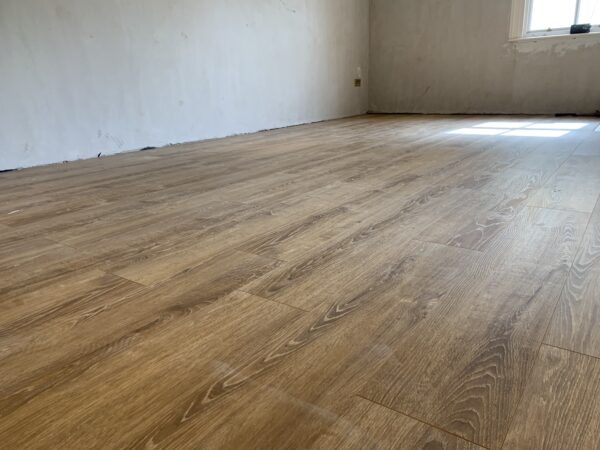
Whether you’re renovating a Dublin apartment or updating a family home in Kildare, laminate delivers a clean, contemporary look without the higher cost of hardwood.
But if you’re new to flooring, you might be wondering: What exactly is laminate plank flooring? And how is it different from engineered wood or vinyl?
Laminate flooring is a multi-layered product made from:
- a durable wear layer (protects against scratches and stains),
- a high-resolution photographic layer (gives the realistic wood, stone, or tile look), and
- an HDF core (high-density fibreboard for strength and stability).
It’s installed as a floating floor using a simple click-locking system, meaning the boards lock together without the need for nails or glue. This makes laminate faster and easier to install than many other types of flooring. It resembles wood, feels warm underfoot, and performs exceptionally well in busy spaces.
In Dublin and across Leinster, laminate is especially popular for its durability, wide range of styles, and ability to transform a room quickly, whether you’re restoring a rental, refreshing a living room, or finishing a new extension.
In this blog, we’ll walk you through the entire flooring installation process, highlight common pitfalls, and share expert tips from MM Parquet’s 35+ years in the industry.
By the end, you’ll know exactly how to install laminate flooring confidently.
Why You Should Choose Laminate Plank Flooring (Especially in Dublin/Leinster)
Before diving into the “how,” it’s worth understanding why laminate is such a smart choice, particularly in Ireland:
Laminate Plank Flooring Is Cost-Effective
Laminate flooring gives you the look of real wood without the high price tag.
Compared to engineered or solid hardwood, laminate can be more affordable, yet still deliver a high-end appearance when you choose a realistic grain and texture.
For homeowners renovating multiple rooms, such as hallways, bedrooms, or open-plan living spaces, this makes laminate a budget-friendly way to achieve a cohesive, contemporary look throughout the home.
Why this matters locally:
In Dublin and Leinster, where renovation costs have risen steadily and labour availability fluctuates, many homeowners are looking for stylish solutions that don’t compromise on quality. Laminate fits this need perfectly.
Laminate Plank Flooring Is Easy to Install and Perfect for DIY Projects
Laminate is designed with a click-lock floating system, meaning the planks lock together without the need for glue or nails. This makes installation far quicker and easier than traditional wood flooring.
Even if you’re not a DIY expert, laminate is one of the most approachable flooring types to learn on, and for those hiring professionals, it reduces fitting time and labour costs.
Why this matters locally:
In tight Dublin terraces, apartments, or busy family homes, faster installation means less disruption and fewer days living in a “construction zone.”
Laminate Plank Flooring Offers Excellent Design Versatility
You can get laminate in a wide range of decors (oak, walnut, even tile-look), plus with different thicknesses to match your space and budget.
From Scandinavian light oak to rich walnut and textured grain patterns, laminate offers one of the most diverse design ranges on the market. You can choose floors that look like:
- Hardwood.
- Stone.
- Tiles.
- Reclaimed timber.
- Dark industrial woods.
- Contemporary greys and neutrals.
You’re not limited to natural tones either. Modern laminates come in matte, embossed, hand-scraped, and ultra-realistic finishes that rival engineered wood.
Why this matters locally:
Dublin homes vary massively in style. We have Victorian red-bricks, 90s semis, modern apartments, and eco-builds. Laminate’s variety makes it easy to match any interior without compromise.
Laminate Plank Flooring Is Practical for Irish Homes
One of the reasons laminate performs well in Irish homes is its stability.
While hardwood reacts more strongly to humidity changes, laminate is much more resistant to warping, cupping, expanding, and shrinking.
That said, proper subfloor preparation and moisture control remain essential, especially on concrete ground floors or older Dublin properties.
Why this matters locally:
Homes near the coast (Howth, Sandymount, Dun Laoghaire) and homes with older concrete slabs tend to hold more moisture. Laminate, paired with the correct underlay, handles this environment very well.
Laminate Plank Flooring Is Easy to Maintain for Busy Households
Laminate flooring is incredibly easy to care for. It doesn’t require sanding, waxing, or special treatments.
A simple sweep or vacuum keeps it looking clean, and the protective wear layer helps prevent scratches, stains, and fading.
This makes laminate perfect for rental properties, homes with kids or pets, high-traffic rooms, or families looking for “install it and forget it” floors.
Why this matters locally:
Between muddy shoes, wet coats, and daily footfall, Irish households put their floors through a lot. Laminate handles daily wear beautifully.
Laminate Plank Flooring Is Ideal for Apartments and Multi-Storey Homes
Many laminates come with acoustic underlays that significantly reduce noise, which is an important factor for apartment residents, townhouses, upstairs bedrooms, or converted lofts.
You get a quiet, cushioned feel underfoot and greatly reduced sound transfer.
Why this matters locally:
Apartment living in Dublin continues to grow, and acoustic laminate solutions help meet building regulations while improving everyday comfort.
Laminate Plank Flooring Works With Underfloor Heating (UFH).
Modern laminate flooring is often fully compatible with underfloor heating when paired with the right underlay. It conducts heat efficiently, making rooms feel warm faster and helping reduce heating costs.
Why this matters locally:
A huge number of new builds and extensions in Dublin and Leinster now include underfloor heating systems as standard. Laminate is a perfect match: affordable, stylish, and efficient.
Laminate Plank Flooring Is A Great Option for Quick Transformations.
If you’re preparing a home for sale, refreshing a rental, or updating a room before moving in, laminate offers one of the fastest turnarounds of any flooring type.
With minimal mess and often same-day installation, you can completely transform a room almost instantly.
Why this matters locally:
For landlords, first-time buyers, or homeowners renovating on a timeline, this speed is a big advantage over slower, more labour-intensive flooring types.
Step-by-Step Laminate Plank Flooring Installation Guide
Installing laminate plank flooring is one of the most homeowner-friendly projects you can take on.
With a bit of planning, the right tools, and a steady approach, you can achieve a clean, professional-looking finish without the stress.
In the steps below, we’ll guide you through everything from preparing the room to clicking the final boards into place, with tips tailored for Irish homes to help your floor stay durable and beautiful for years to come.
Step 1: Planning & Preparation
Before you start laying laminate plank flooring, a little preparation goes a long way.
Laminate is designed to be easy to install, but the quality and longevity of the final result depend heavily on what you do before the first board clicks into place.
Here’s what to take care of first:
Acclimatise your planks
Laminate needs time to settle into the temperature and humidity of your home before installation.
- Once delivered, keep your laminate boards in their unopened packaging in the room where they will be installed. For Irish conditions, acclimatisation for 24–48 hours is typical for laminate.
- Maintain room temperature (ideally 18–20 °C) and relative humidity between 40–60%, so the boards can settle.
This simple step helps prevent movement, swelling, or gapping after installation, especially in Dublin and Leinster, where conditions can shift quickly between wet, cold evenings and warm indoor heating.
Inspect and prepare the subfloor
Laminate performs best on a clean, stable, level base.
- The subfloor must be dry, clean, level, and stable.
- Use a moisture meter to test moisture levels. For concrete subfloors, the moisture content should be strictly controlled (many guides warn of unacceptable moisture beyond certain thresholds).
- If the subfloor isn’t level, use a levelling compound, plywood, or self-levelling screed as needed.
If you’re installing over concrete, it’s worth testing moisture levels if the home is older or the subfloor feels cool/damp. Minor unevenness can also be fixed with a levelling compound or plywood layer.
Take damp into consideration (especially in Dublin/Leinster)
Irish homes (particularly older Dublin terraces, coastal houses in areas like Howth or Clontarf, and ground-floor apartments) often deal with mild to moderate moisture in subfloors.
To protect your laminate, use a damp-proof membrane (DPM) or underlay with a moisture barrier
This prevents rising damp from affecting your boards and adds an extra layer of stability and peace of mind.
Step 2: Choosing Underlay and Accessories
The right underlay makes a noticeable difference in how your laminate looks, sounds, and feels.
Instead of thinking of underlay as an afterthought, think of it as the foundation that helps your flooring perform at its best.
Select your underlay
Underlay does more than cushion. It impacts insulation, acoustic performance, and moisture protection.
Here are some types and when to use them in an Irish context:
| Underlay Type | Best Use | Why It Matters in Dublin/Leinster |
| Moisture-barrier underlay (DPM) | Concrete ground floors | Prevents damp coming up from the subfloor, which is key in humid or damp-prone Irish homes. |
| Acoustic underlay | Apartments, upstairs rooms | Helps reduce sound transmission, which is useful given building regulations or multi-storey homes. |
| Thermal underlay | Cold ground floors | Adds insulation underfoot, making rooms warmer for Irish winters. |
| UFH-compatible underlay | Homes with underfloor heating | Allows heat transfer while protecting board joints. |
Other tools and accessories you should have ready
Having everything within arm’s reach helps the installation move smoothly:
- Tape measure, pencil, and straight-edge.
- A saw (jigsaw or handsaw) for cutting boards.
- Rubber mallet, tapping block, and pull bar.
- Spacers for expansion gaps.
- Scotia/skirting boards and door thresholds.
- Silicone edging (e.g., around kitchen perimeters).
Step 3: Installation Process
Once your room is prepped, the underlay is chosen, and the boards are acclimatised, you’re ready to start laying your laminate floor.
Laminate is designed to be straightforward thanks to its click-locking system, but taking your time with each step ensures a clean, long-lasting finish.
Here’s a simple breakdown of the installation process:
Lay your underlay
Start by rolling out your underlay across the entire room. This creates a smooth, cushioned base for your laminate and provides insulation, sound reduction, and (depending on the type) moisture protection.
- Make sure each strip sits neatly against the next without overlapping.
- Tape the seams for a seamless, stable surface.
- Trim any excess neatly at the edges.
A well-laid underlay makes the click-fit installation much easier.
Lay the first row
Getting row 1 right is half the battle.
- Start along the longest, straightest wall in your room. This helps the flooring look more natural and balanced once finished.
- Lay the first row with the tongue side facing the wall.
- Place spacers (10–12 mm is common) between the planks’ edges and the wall to allow room for expansion as the boards thermally expand and contract.
- Make sure the boards line up perfectly straight. This row sets the foundation for everything else.
- Connect the boards using the click-locking system: angle the plank (~30°), then click it into the previous row, tapping gently with the tapping block.
Continue laying subsequent rows
- Stagger the joints for strength and appearance. Avoid lining up end joints in a straight line. A staggered pattern looks more natural, increases the floor’s stability, and helps reduce movement over time. Aim for at least 30 cm between end joints on neighbouring rows. This little bit of planning goes a long way to achieving a professional finish.
- Keep checking that the subfloor remains clean and dry. If dust builds up, vacuum before continuing.
Cutting boards to fit around edges and features
Most rooms won’t be perfectly square, so expect to make cuts around door frames, radiator pipes, corners, alcoves, and the final row along the far wall.
- Use a jigsaw for tricky cuts around door frames, radiator pipes, or corners.
- For straight cuts, a fine-tooth saw or laminate cutter is ideal. Always mark from the decorative top side of the plank.
- When working around radiator pipes, leave a small gap (2–3 mm) and cover with pipe roses or trim pieces.
- The last row often requires cutting boards lengthwise. Take your time with this section. Measure the space accurately. Account for the expansion gap. Use a pull bar to lock the final boards into place. This step makes the whole floor look tight, clean, and well finished.
Add the finishing touches
- Remove the spacers.
- Install scotia or skirting boards to cover the expansion gap. Make sure you fix the skirting to the wall, not the floor.
- Fit transition strips or thresholds at doorways for smooth transitions into other rooms and to give a clean finish.
- Give the floor a quick vacuum and a light, damp wipe to remove any sawdust.
This final stage transforms the room from a work zone to a finished space.
Special Considerations for Irish Homes
Installing laminate plank flooring in Ireland, especially around Dublin, Kildare, Wicklow, and Meath, comes with a few unique considerations.
Our climate, housing stock, and building habits mean that a “one-size-fits-all” approach doesn’t always work.
Here’s what to keep in mind to ensure your floor performs well long-term.
Moisture and Aging Buildings
Ireland’s climate is famously damp, and Dublin homes in particular often deal with higher humidity levels, older subfloors, or limited ventilation.
This matters because laminate floors need a dry, stable base.
To avoid swelling or buckling:
- Check moisture levels before installation.
- Use a moisture-resistant underlay (essential for ground floors).
- Ensure the room is warm and dry during fitting.
- Make expansion gaps non-negotiable.
- Always use spacers during installation, and ensure the perimeter gap stays consistent.
- Local installers strongly recommend letting the boards sit in the room for 24–48 hours. Improper acclimatisation is one of the most common causes of issues like board gaps or buckling in laminate installations.
Homes near the coast or in older terraces tend to benefit the most from an added moisture barrier.
A Good Underlay
In Leinster’s mix of apartments, semis, and period homes, the right underlay can make a massive difference.
Depending on the building, you may need:
- Sound-reducing underlay for apartments or duplexes.
- Thermal underlay for draughty older homes.
- Vapour barrier underlay for concrete subfloors.
- Premium acoustic underlay for upstairs rooms.
Choosing the correct underlay is one of the easiest ways to boost comfort, noise reduction, and longevity.
Underfloor Heating Compatibility
Underfloor heating is now standard in many new builds across Dublin and the surrounding counties.
Laminate works brilliantly with UFH as long as you choose a certified compatible product.
Before installation:
- Ensure your laminate is UFH-approved.
- Use the right underlay (not all are suitable).
- Keep heat below manufacturer limits (usually 27°C max).
When done correctly, laminate provides a warm, comfortable, and energy-efficient surface.
Subfloor Quality in Irish Homes
Not all Irish floors are created equal. Between older Dublin properties, 1980s builds, and modern extensions, you can find:
- Uneven concrete.
- Old timber floors.
- Residual adhesives from previous flooring.
- Dips, rises, or cracked screeds.
Laminate needs a level surface to click together properly. A little subfloor prep (like minor levelling or clearing old debris) avoids future squeaks, gaps, or movement.
Room-Specific Suitability
Laminate is durable and versatile, but not ideal for every space. It’s perfect for living rooms, bedrooms, hallways, home offices, playrooms, and dining rooms. But it’s not recommended for bathrooms or very damp utility rooms.
In humid spaces, consider vinyl plank, engineered wood instead, or options MM Parquet can also advise on.
Real-Life Footfall in Dublin & Leinster Homes
Homes in busy Dublin suburbs choose laminate because it holds up brilliantly against kids, pets, prams, constant foot traffic, and rental turnover.
AC-rated laminate (AC3 for domestic, AC4/AC5 for high-use areas) ensures your floor stays beautiful even in lively homes.
Common Problems & How to Avoid Them
Even though laminate plank flooring is designed to be straightforward, a few common mistakes can affect how your floor looks and performs over time.
The good news? Almost all of these issues are completely avoidable with proper preparation and a bit of attention during installation.
Below are the problems we see in Irish homes, along with simple solutions to keep your new floor smooth, stable, and long-lasting.
| Problem | Likely Cause | How to Fix or Prevent It |
| Buckling or Lifting Edges | Boards weren’t acclimatised properly, or there’s no expansion gap around the perimeter. | Let boards acclimatise 24–48 hrs. Use spacers. Maintain a consistent expansion gap and avoid fitting skirting too tight. |
| Gaps Between Boards | Uneven subfloor or boards not clicked fully into place. Joints are not staggered. | Level the subfloor. Check each click connection. Stagger end joints by at least 30 cm and use a tapping block for a snug fit. |
| Creaking or “Clicky” Sounds | Poor-quality underlay, overlapping underlay, or subfloor movement. | Use the correct underlay (especially in apartments/upstairs rooms). Ensure the underlay lies flat with no folds. Fix loose subfloor areas before starting. |
| Moisture Damage or Warping | High subfloor moisture, no damp-proof membrane, or wrong underlay type. | Test moisture levels. Always use a DPM or moisture-barrier underlay on concrete floors. Avoid installing laminate in high-moisture rooms. |
| Uneven or Unstable Final Row | Incorrect measurements or boards cut too tight without accounting for the expansion gap. | Measure carefully. Allow the required expansion space. Use a pull bar to lock the last row securely into place. |
After Laminate Plank Flooring Installation: Care and Maintenance
Laminate plank flooring is designed to be low-maintenance, but a few simple habits will keep it looking fresh, clean, and long-lasting. Once your new floor is installed, here’s how to care for it day to day:
- Regular Cleaning: Sweep or vacuum to remove grit. Do an occasional damp mop with the recommended laminate cleaner. Avoid traditional “wet mopping” because too much water can seep into joints over time.
- Avoid Standing Water: Laminate is water-resistant, not waterproof. If anything spills (drinks, pet bowls, or mop water), wipe it up promptly to prevent swelling or edge damage.
- Protect Against Scratches: Laminate is durable, but furniture can still leave marks. Add felt pads under chairs, tables, and heavier pieces. Use protective mats under office chairs or high-use areas. Avoid dragging furniture across the floor. These small steps go a long way.
- Control Indoor Humidity: To reduce expansion or contraction of the boards, try to keep indoor humidity between 40–60%, especially during Irish winters when heating dries out the air. A small humidifier or dehumidifier can help in extreme seasons.
- Routine Inspection: Every few months, give your flooring a quick check. Make sure transition strips and thresholds are secure. Ensure skirting boards or scotia haven’t loosened. Look for any small gaps developing in high-traffic spots. Catching minor issues early keeps your laminate floor looking and performing its best for years.
Why MM Parquet Recommends Laminate Plank Flooring (and How We Support Your Project)
At MM Parquet, even though our name centers on parquet and engineered wood, we strongly support laminate flooring for clients who want a stylish, durable, and budget-friendly floor.
Here’s how we help:
Local Knowledge You Can Trust
From uneven Victorian subfloors to brand-new extensions in Meath, we understand the quirks of Irish homes.
Our fitting methods and product recommendations are tailored to local conditions, climate, and building styles, ensuring your laminate floor performs exactly as it should.
Professional Moisture Testing
Moisture is the number-one cause of laminate issues in Ireland.
We carry out reliable pre-installation moisture checks using trusted methods to ensure the subfloor is safe, dry, and ready, giving you peace of mind before a single board is laid.
Premium Underlay Options
Your underlay matters just as much as your laminate.
We supply a full range of high-quality underlays, including:
- Acoustic underlay for apartments and upstairs rooms.
- Thermal underlay for colder ground floors.
- Moisture-barrier (DPM) underlay for concrete bases.
- Underfloor-heating-compatible underlays.
This ensures the right foundation for warmth, comfort, and stability in your specific space.
Expert, Precision Installation
Laminate is DIY-friendly, but a professional fit guarantees a flawless finish.
Our installation teams ensure:
- Correct expansion gaps.
- Perfectly aligned joints.
- Secure transitions and edging.
- A level, quiet, and stable floor.
It’s the kind of quality that pays off for years.
Aftercare Guidance You Can Rely On
We don’t just fit your floor and walk away.
We provide personalised maintenance advice so you know exactly how to keep your laminate looking fresh, from cleaning routines to humidity control to long-term care tips.
Bringing It All Together: Laminate Plank Flooring for Irish Homes
Laminate plank flooring is a smart, flexible, and practical choice for many homes around Dublin and Leinster.
When installed with care, especially considering humidity, subfloor moisture, and expansion needs, it delivers a high-quality finish at a fraction of the cost of solid wood.
By following the steps above, you can ensure a long-lasting installation that looks great and performs well.
And if you want an experienced partner, MM Parquet is ready to support you from planning through to aftercare.
If you’re considering laminate for your next flooring project, reach out to us for a free consultation. We’d love to help you choose the right product, underlay, and installation plan tailored to your home.
Gallery