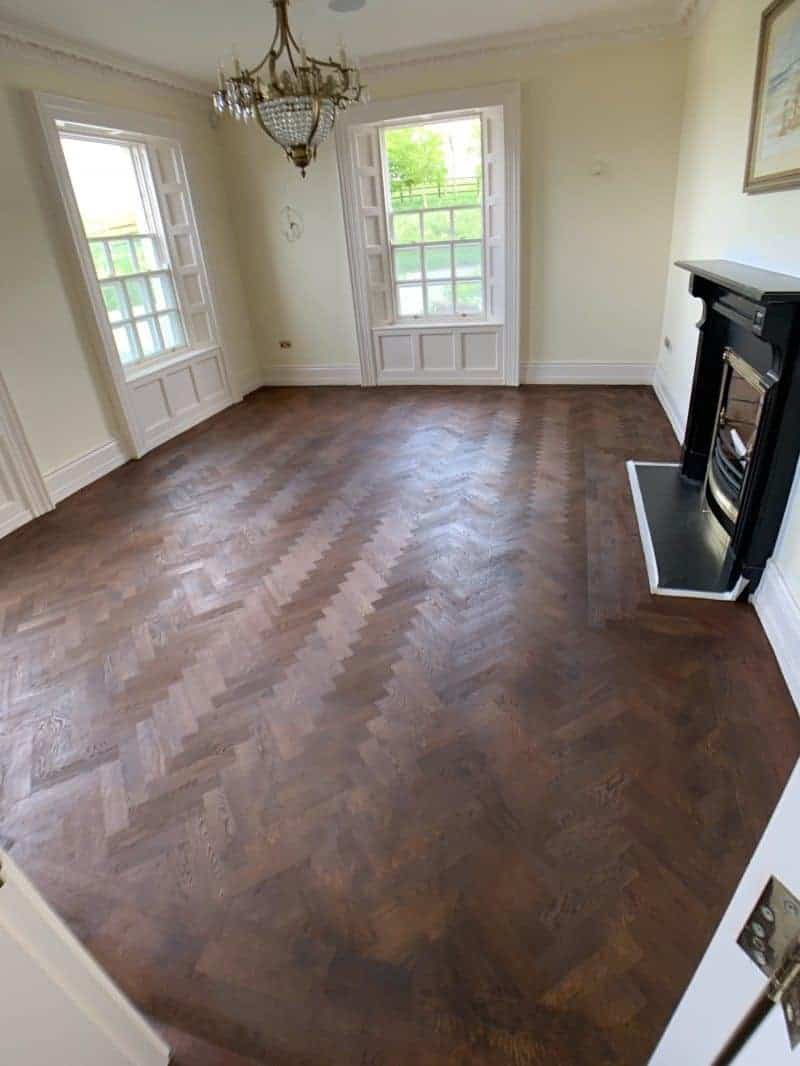
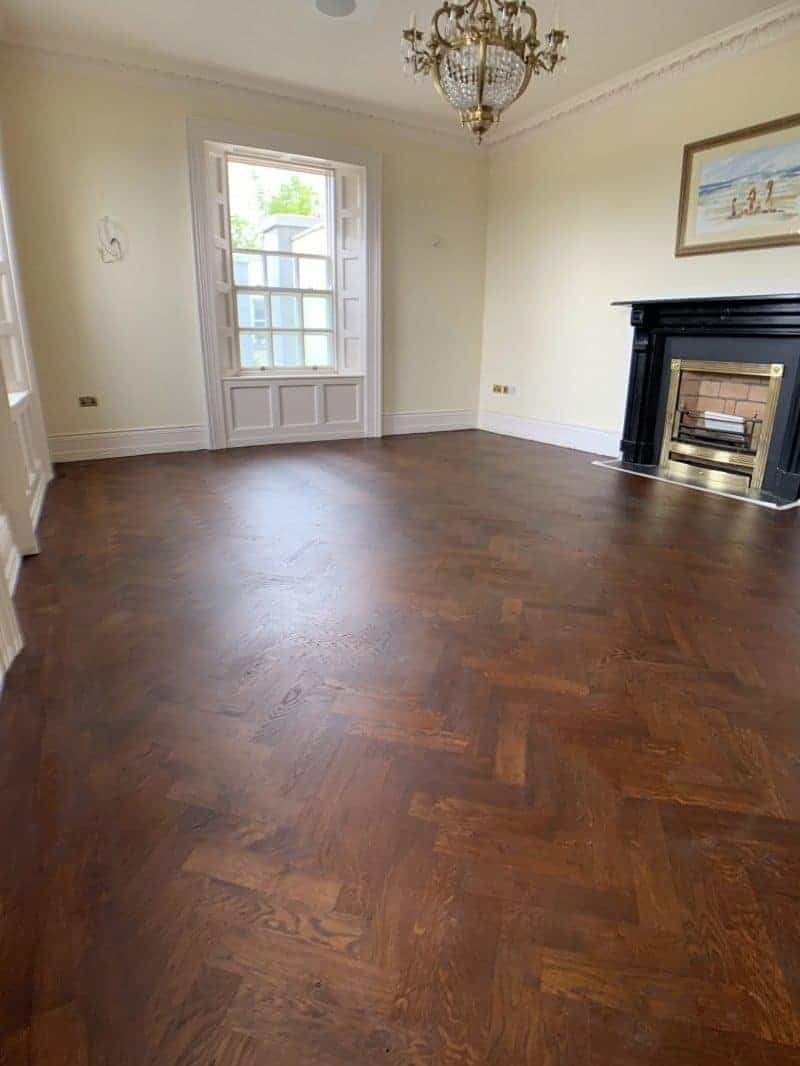
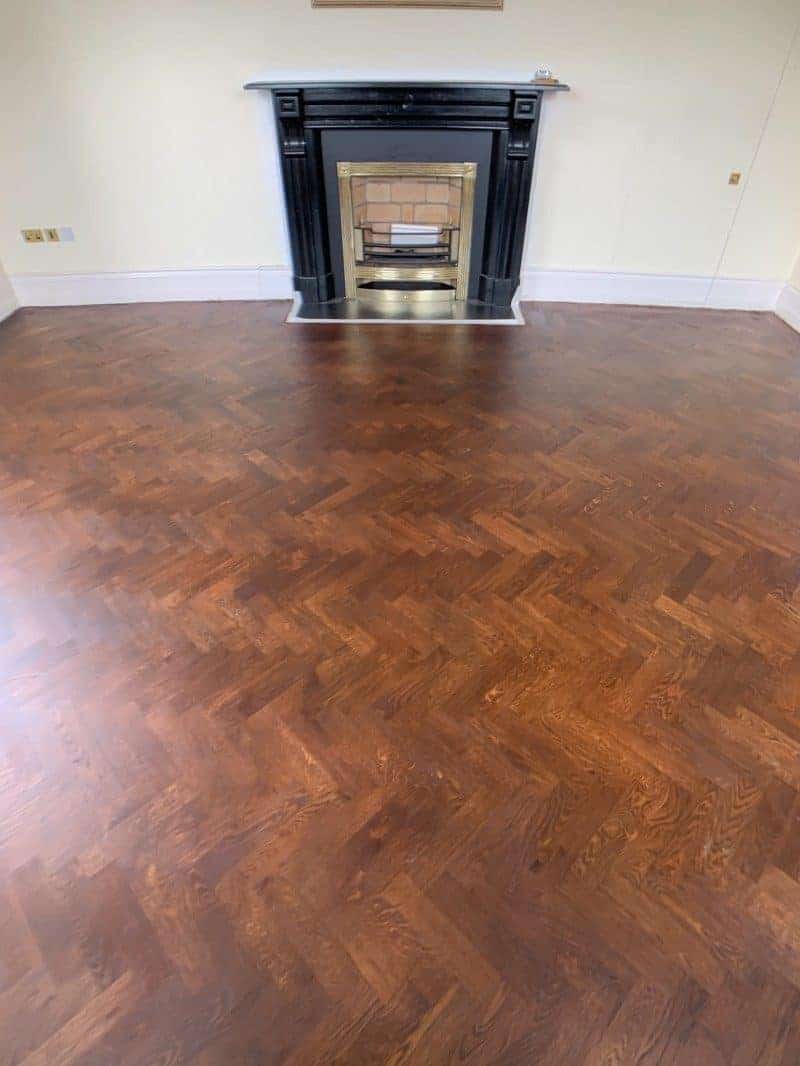
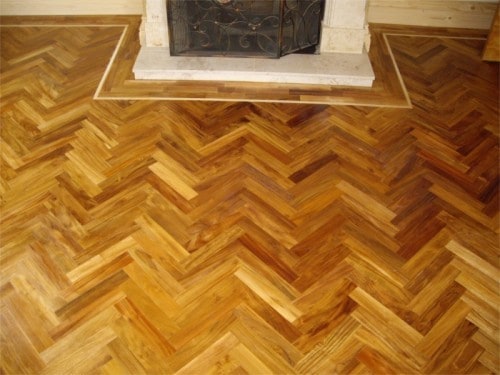
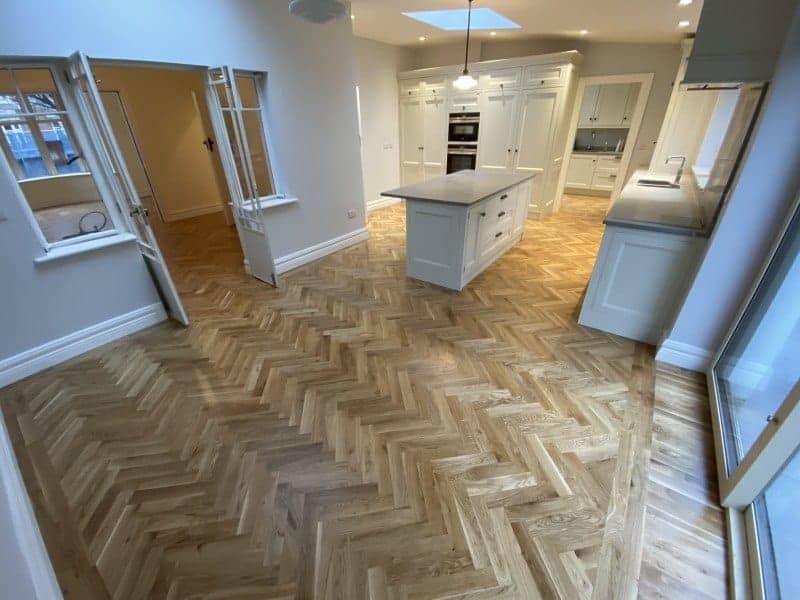
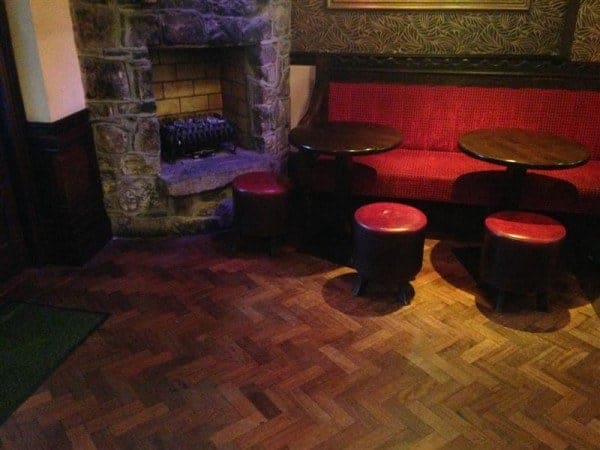
Solid Oak Herringbone Flooring: 16mm vs 22mm and Which to Choose
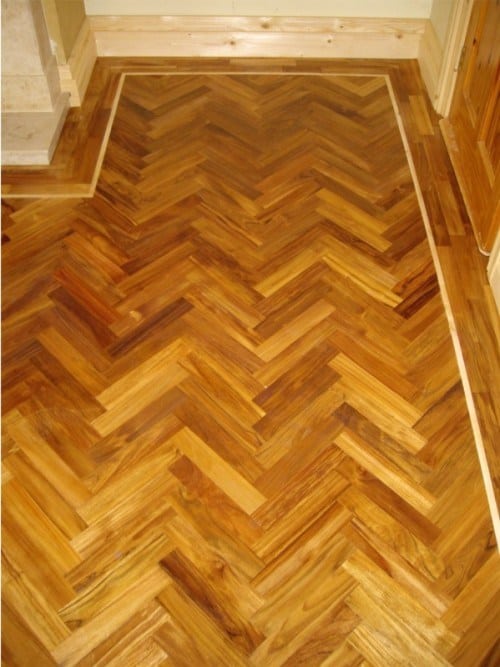
There are floor patterns, and then there is herringbone.
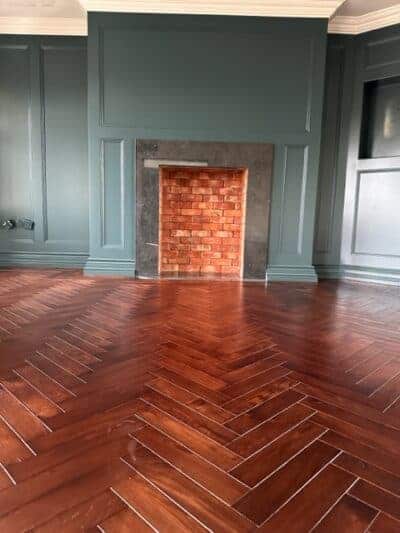
Few design choices carry the same weight: the immediate visual impact, the sense of craft and intention, and the ability to make a room feel both grounded and elegant at the same time.
It’s a pattern with centuries of history behind it, and yet it feels just as fresh and desirable in a Dublin home today.
This is precisely why herringbone flooring continues to be one of the most requested styles we work with at MM Parquet.
But choosing herringbone is only the beginning of the decision.
Once you’ve fallen for the pattern, the questions start.
Solid or engineered? Which oak species? What finish? And perhaps most importantly: 16mm or 22mm thickness?
That last question is one we answer every week, and it matters more than most people initially realise.
At MM Parquet, we supply and install solid oak herringbone flooring across Dublin, Leinster, and the surrounding counties, and we’ve been doing so for over 35 years.
In this guide, we’ll give you clear, direct answers to every question worth asking, so you can make the right choice for your home.
What Is Solid Oak Herringbone Flooring?
Let’s start with the basics, because the distinction matters.
Solid oak herringbone flooring is exactly what its name promises: each individual block is cut from a single, continuous piece of hardwood timber, from the surface you walk on right down to the bottom face.
There are no layers, no core materials, no composite construction. Just wood, all the way through.
This is what sets it apart from engineered herringbone, which uses a real hardwood top layer bonded to a plywood or timber core. Engineered is an excellent product in its own right, and in some settings it’s the smarter choice, but solid oak herringbone is the authentic article. When you’re talking about real wood herringbone flooring, this is it.
European oak is the species of choice for solid herringbone parquet, and for very good reason. It’s dense and stable compared to other solid hardwoods, and possesses warm and varied grain character that suits the Irish home perfectly.
It responds well to a wide range of finishes, ages gracefully, and has a proven track record spanning centuries of use in floors across Europe.
For solid wood herringbone flooring, European oak is the benchmark against which everything else is measured.
16mm vs 22mm Thickness: What’s the Difference?
This is the question at the heart of this guide, so let’s answer it clearly.
Both 16mm and 22mm refer to the thickness of each individual solid oak block, and while 6mm might not sound like a big difference, in practice, it affects several important things.
Structural feel underfoot is the first. A 22mm block is more substantial. It has a solidity and density beneath the foot that 16mm, while perfectly sturdy, doesn’t quite match. In large rooms with generous proportions, that extra thickness makes a floor feel planted and permanent.
Sanding and refinishing potential is where the difference really becomes pronounced. Every time a solid floor is sanded (to remove surface scratches, refresh the finish, or change the colour), a small amount of timber is removed from the top. A 16mm block can be sanded and refinished two to three times over its lifetime, depending on the depth of each sanding. A 22mm block, with its greater timber reserve, can usually withstand four or more full restorations.
Over a lifetime of ownership, or across multiple generations, that difference is substantial. 22mm is the longer-term investment.
Weight and subfloor requirements are also worth considering. 22mm solid oak herringbone is heavier, which means the subfloor needs to be in excellent condition to support it properly. Both thicknesses require a flat, dry, and stable subfloor, but the demands on that subfloor are marginally higher for the thicker format.
So which should you choose?
Choose 16mm if you’re working with a tighter budget, your subfloor has limited load tolerance, or you’re fitting in a room where the floor-to-door clearance is already tight.
It’s an excellent floor that will serve you well for decades with proper care.
Choose 22mm if longevity is your priority. If you’re investing in a forever home, or if you want the absolute maximum refinishing potential from your floor, it’s the choice that pays the biggest dividends over the longest timeframe, and the one we recommend when your budget allows.
Solid Oak Herringbone Flooring: Square-Edged vs Tumbled Finishes
Once you’ve settled on your thickness, the next decision is the edge profile of your blocks, and this is where the character of your herringbone floor really begins to take shape.
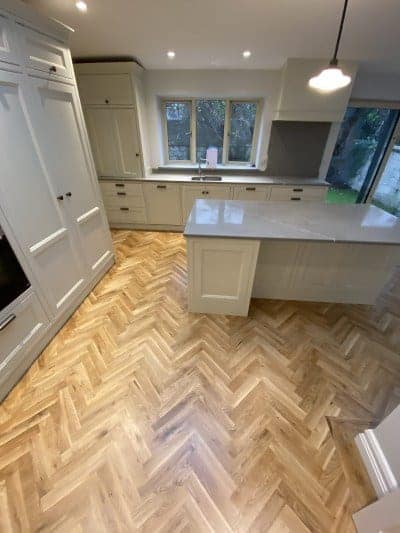
Square-edged blocks have clean, precise edges that meet tightly at each joint. The result is a sharp herringbone pattern with crisp lines and a contemporary feel. If your interior leans modern, including clean walls, minimal clutter, and a neutral palette, then square-edged solid oak herringbone is the natural companion. It’s disciplined and precise in the best way.
Light tumbled introduces a subtle softening to those edges. The blocks are gently processed to ease the sharpness of each corner and edge, creating a more relaxed joint line that gives the floor a warmer, more lived-in quality. It’s a middle ground that works beautifully in interiors that want the elegance of herringbone without the rigidity of a sharp geometric edge. Most Irish homes, which tend to favour warmth over austerity, respond very well to a light tumbled finish.
Tumbled takes that character further still. The blocks are more heavily processed, creating pronounced edge softening and an aged, worn quality that feels antique. This is the finish for period properties: Victorian and Edwardian homes across Dublin’s older suburbs, Georgian townhouses, or any space where the architecture has age and history.
A tumbled herringbone parquet flooring in a period hallway is one of the most beautiful things we install.
How to choose: Think about your walls, your furniture, and the overall mood of the space. If it’s contemporary and minimalist, go with square-edged. If it’s warm and relaxed, choose light tumbled. And, if it’s period or heritage, you can choose tumbled.
When in doubt, we’re always happy to show you samples in person.
Why Choose Solid Over Engineered Herringbone?
Both are real wood. Both can look spectacular. But they serve different needs, and being honest about those differences is important.
The case for solid oak herringbone comes down to three things: longevity, refinishing potential, and authenticity.
A solid herringbone hardwood floor can be sanded back to bare timber and completely refinished multiple times over its lifetime. Want to change your interior style in twenty years and choose a different colour? Sand it back and re-oil. Want to repair a damaged section? It can be done without the whole floor looking mismatched. And there’s an authenticity to solid timber that many people find irreplaceable.
The case for engineered herringbone is equally clear in the right circumstances. If your home has underfloor heating, which is increasingly common in Irish new builds across Leinster, solid herringbone is not recommended. The temperature cycling of underfloor heating causes solid timber to expand and contract, leading to gapping and movement over time. Engineered herringbone, with its dimensionally stable core, handles underfloor heating without any issues. Similarly, in rooms with higher moisture levels or concrete subfloors with residual moisture, engineered is the safer and more practical choice.
The short version: if you have underfloor heating or moisture concerns, choose engineered. If you don’t, solid oak herringbone is the premium choice and worth every penny.
Best Rooms for Solid Oak Herringbone Flooring
Oak herringbone flooring is one of the most versatile patterns available, and it works across almost every room in the house, with a few practical considerations.
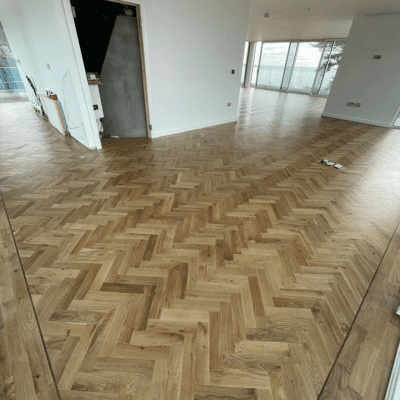
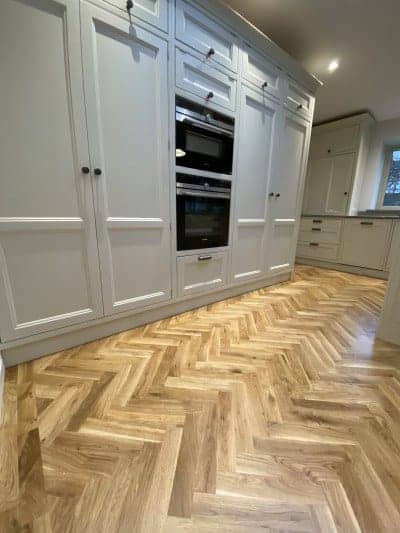
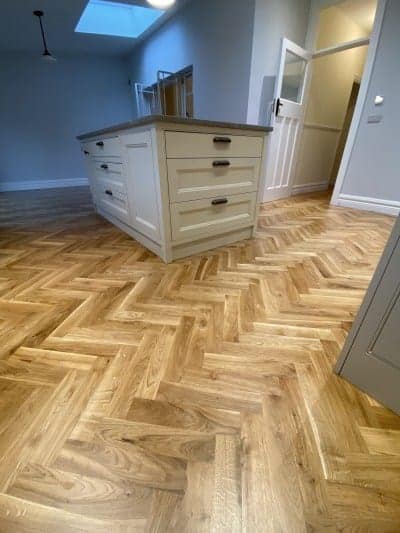
Living rooms and dining rooms are where herringbone flooring is most at home. The pattern has the scale and presence to hold its own in a generous room. And, in a well-lit living space, the interplay of light across the alternating grain directions of the herringbone blocks looks beautiful.
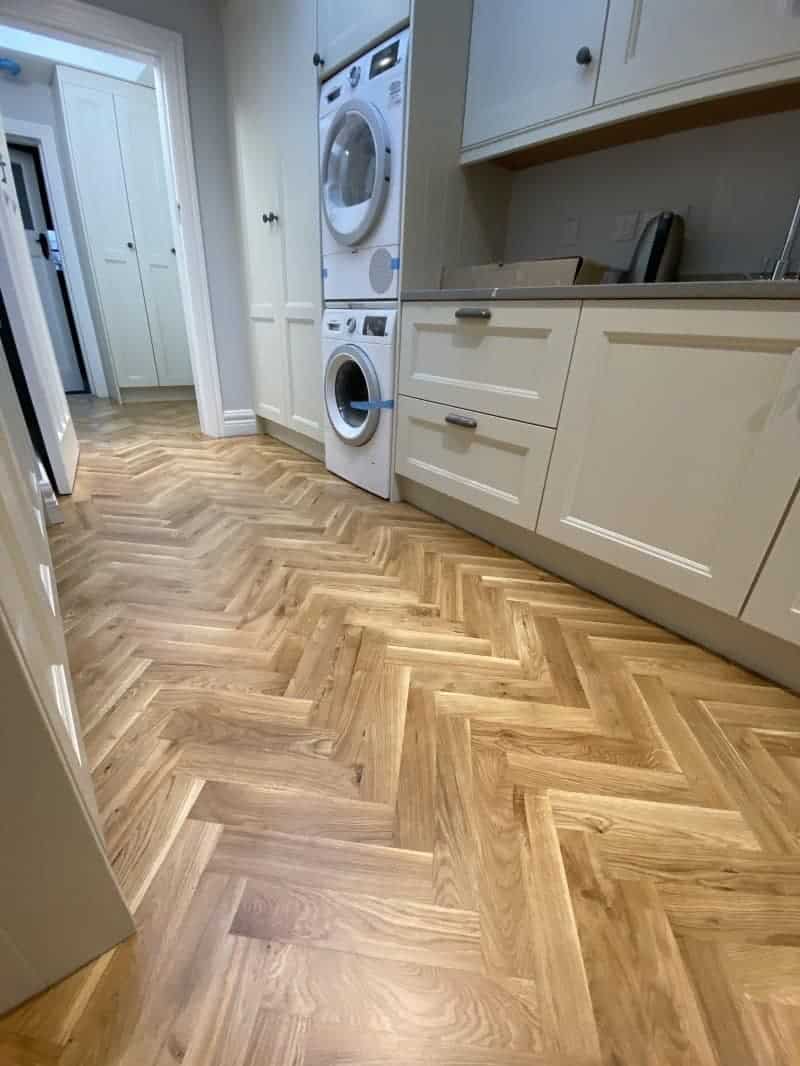
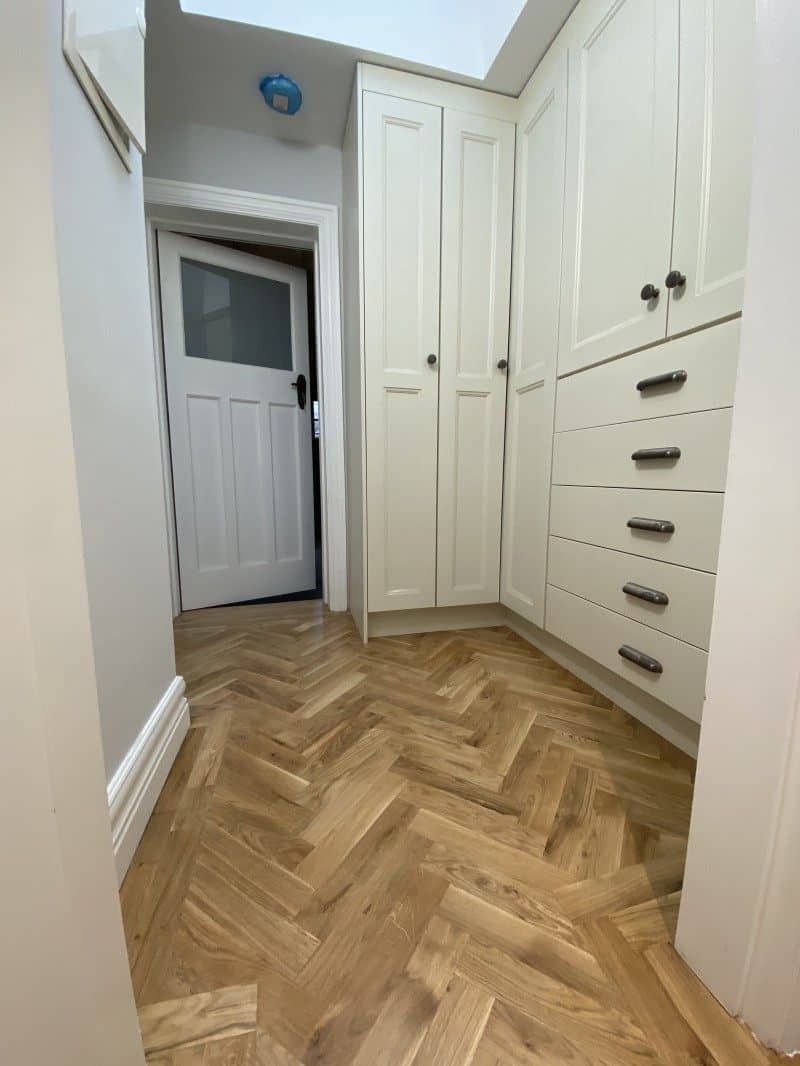
Hallways and entrance areas are perhaps the single best showcase for herringbone timber flooring. The directional quality of the pattern and the way it leads the eye forward along its V-shaped rows is perfectly suited to a hall or corridor, creating a sense of arrival and movement.
Bedrooms benefit from the warmth and softness that timber brings underfoot, and herringbone in a bedroom feels quietly luxurious, especially in lighter oak tones with an oiled finish.
Kitchens require careful consideration for solid herringbone. In a kitchen without underfloor heating and with a stable, dry subfloor, solid oak herringbone is achievable with the right finish (a hard lacquer is advisable for better moisture resistance). In a kitchen with underfloor heating or higher moisture exposure, engineered herringbone is the more sensible route.
Subfloor Requirements for Solid Herringbone
Solid herringbone parquet is a demanding format when it comes to subfloor preparation. That’s not a reason to be put off. It’s a reason to do it properly.
The subfloor must be flat, dry, and structurally sound. Any unevenness (humps, dips, or soft spots) will show through the thin solid blocks over time, causing movement and squeaking. Before any solid herringbone installation, MM Parquet assesses the subfloor thoroughly and addresses any issues before a single block is laid.
Concrete subfloors are perfectly suitable for solid herringbone, provided moisture levels are within acceptable limits. A damp-proof membrane is standard practice over concrete. Timber subfloors, common in older Dublin period properties, are equally suitable and preferable, providing a sympathetic base for the solid blocks above.
Acclimatisation is non-negotiable. Solid oak herringbone blocks need to spend time in the room where they’ll be installed (5 to 7 days minimum) to adjust to the temperature and humidity before fitting begins.
This step prevents the movement and gapping that can occur when timber is installed before it has adjusted to its environment. At MM Parquet, we build this into every project timeline as the standard.
Herringbone Floor Installation: What to Expect
Solid oak herringbone is almost always installed using a glue-down method. Each block is individually adhered to the subfloor using a flexible timber adhesive, creating a bonded surface that eliminates micro-movement and provides stability.
The geometry of the herringbone pattern requires precise layout planning from the outset. The pattern must be centred correctly in the room, the angle must be consistent throughout, and the cut blocks at the perimeter must look deliberate and balanced rather than awkward. An experienced installer plans all of this meticulously before the first block goes down.
The timeline for a typical room varies depending on size, subfloor condition, and whether any remedial preparation work is needed. As a general guide, allow for subfloor preparation, acclimatisation time, installation, and then curing time for the adhesive before the floor can be walked on or finished.
Your MM Parquet installer will provide a clear project timeline from the start, so there are no surprises.
Solid Oak Herringbone Flooring: Finishing Options
The finish on your solid oak herringbone floor is the final, and in many ways the most personal, decision in the whole process. It determines the colour, sheen level, tactile feel, and ongoing maintenance requirements of the floor.
Factory-finished boards arrive with the finish already applied at the manufacturer, which means the floor can be walked on almost immediately after installation with no curing time required. Site-finished floors are sanded and finished after installation, allowing you to customise and produce a seamless surface with no board-to-board finish variation.
Oil finishes remain the most popular choice for solid oak herringbone in Irish homes. An oiled floor has that warm, deeply tactile quality that enhances every characteristic of the oak grain beneath it. It’s the finish that makes the timber look most like itself. The commitment is periodic re-oiling, but for most people, the result is worth it.
Lacquer finishes offer greater surface hardness and lower maintenance. A matt or satin lacquer looks natural and provides excellent protection; it’s a strong choice for hallways and living rooms with heavy foot traffic.
Colour options span a wide spectrum. Natural and honey-toned oaks are popular in Irish homes. Smoked and fumed oak delivers richer, darker tones that feel premium. White-oiled and limed finishes suit cooler, more contemporary palettes. Stained options in grey, charcoal, and beyond are also available for those who want something more distinctive.
Solid Oak Herringbone Flooring: Maintenance and Longevity
Solid oak herringbone, properly installed and finished, is one of the most durable and long-lasting floors available. Looking after it is pretty straightforward.
Daily care means regular sweeping or dust-mopping to remove grit, which is the primary cause of surface scratching on any timber floor. A microfibre mop head is ideal. For wet cleaning, use a barely damp mop with a cleaning solution that is appropriate for timber. And never use steam mops or excessive water on solid timber.
When to refinish depends on the level of wear and your finish type. Oiled floors benefit from an annual maintenance oil to keep the surface nourished. When the finish begins to look dull or worn in high-traffic areas, a professional sanding and refinishing restores the floor to its original condition.
Lifespan by thickness: A well-maintained 16mm solid oak herringbone floor, refinished two to three times over its life, should comfortably last 40 to 60 years. A 22mm floor, with its greater sanding reserve and four or more refinishing cycles, can realistically last a century or more, and that’s not an exaggeration.
These are floors that outlast their owners. Choose accordingly.
Costs and Getting a Quote for Solid Oak Herringbone Flooring
Solid oak herringbone flooring is a premium product, and its pricing reflects the quality of the material, the craftsmanship of the installation, and the decades of value it delivers.
Thickness is the primary variable within the solid oak herringbone range: 22mm commands a higher price than 16mm because it has a greater volume of timber in each block.
Edge profile, square-edged, light tumbled, or tumbled, can also affect cost.
Finish choice matters too, especially if you opt for site-finishing or a specialist treatment like smoking or fuming.
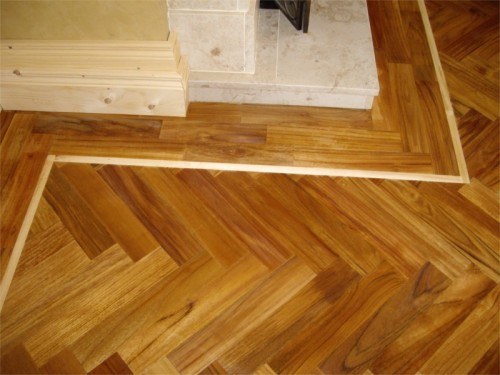
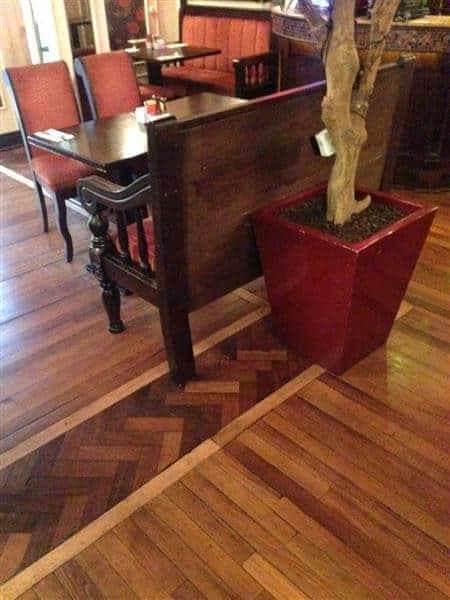
Room size and subfloor condition affect installation cost the most. A subfloor that requires preparation work, like levelling, damp-proofing, or structural attention, adds to the overall project cost, even though it is essential to the long-term performance of the floor above it. Borders and feature details add to the cost but enhance the floor dramatically.
The most accurate way to understand what your specific project will cost is a personalised quote from a specialist who has seen your space.
At MM Parquet, we provide detailed and transparent quotes across Dublin, Leinster, and the surrounding counties, with honest advice on which thickness, finish, and specification will give you the best value for your budget.
Contact MM Parquet today for your free consultation and personalised herringbone flooring quote.
The Pattern That Never Goes Out of Style
Herringbone flooring has been gracing the floors of exceptional homes for centuries. And, solid oak herringbone, in either 16mm or 22mm, is the purest expression of that tradition.
It’s a floor that rewards every decision made carefully: the right thickness for your long-term plans, the right edge profile for your interior style, and the right finish for your lifestyle.
Get those decisions right, and what you end up with is a floor that improves with age, adds enduring value to your property, and makes your home feel like exactly that: a home.
Whether you’re drawn to the crisp geometry of a square-edged 22mm oak herringbone in a contemporary Dublin living room, or the warm, aged character of a tumbled 16mm block in a period Leinster hallway, MM Parquet has the product, the expertise, and the passion to bring it to life.
Book your free consultation today, and let’s find the perfect herringbone floor for your home.
MM Parquet — Crafting Exceptional Timber Floors Across Dublin, Leinster & Beyond for Over 35 Years.
Gallery