Floor Sanding Services in Ireland: When to Sand, Seal, or Replace your Floors
Wooden floors are one of the most beautiful features in any Irish home. Whether you’re in a period redbrick in Dublin, a modern build in Kildare, or a countryside home in Wicklow, timber flooring adds warmth, character, and long-term value.
But over time? Life happens.
Scratches from pets. Scuffs from busy family life. Water marks from our damp Irish weather. Fading from sunlight. That once-rich, glossy finish can start to look tired.
So the big question becomes:
Should you sand, seal, or replace your wooden floors?
If you’re searching for floor sanding in Ireland, particularly in Dublin, Leinster, Wicklow, Kildare, or Meath, this guide will help you understand your options, and when it’s time to call in professionals like MM Parquet.
When Should You Sand Your Floors?
Floor sanding is the process of removing the top layer of your wooden floor using specialised equipment to remove scratches, stains, and old finishes, revealing fresh timber underneath.
Floor sanding is one of the most effective ways to completely transform worn timber floors, without the cost of replacing them.
Signs Your Floor Needs Sanding
You may need floor sanding if you notice:
- Surface scratches and scuffs.
- A dull or faded appearance.
- Light water staining.
- Uneven colouring.
- Wear in high-traffic areas (hallways, living rooms, kitchens).
If the damage is mainly on the surface, sanding can remove years of wear and reveal fresh wood underneath
Why Floor Sanding Is Usually the Best Option
For many homes across Dublin and Leinster, floor sanding is:
- More affordable than replacement.
- Eco-friendly (you keep your existing timber).
- Transformative.
- Long-lasting when properly sealed.
At MM Parquet, we use advanced, dust-controlled equipment for hardwood floor sanding, resulting in less mess, faster turnaround, and a flawless finish.
Our expert team carefully removes scratches, stains, and signs of wear to reveal the original beauty beneath. Whether you have an oak, walnut, teak, or another hardwood floor, we tailor the sanding process to achieve the best results.
Many homeowners are surprised at how new their floors look after sanding and refinishing.
When Sealing or Refinishing Is Enough
Sometimes, full floor sanding isn’t necessary, and sealing is enough.
What Is Floor Sealing?
Sealing (or refinishing) involves applying a protective layer to the surface of your timber floor. This helps:
- Protect against moisture (important in Ireland’s climate).
- Prevent scratches.
- Enhance the grain and color.
- Extend the lifespan of your floor.
When Resealing Makes Sense
Resealing may be enough if:
- The floor looks slightly dull but isn’t deeply scratched.
- You’ve recently installed new timber flooring.
- You want preventative maintenance.
- The wear is light and surface-level.
Floor sealing in Dublin homes is especially important because moisture can slowly damage untreated timber over time.
Our team at MM Parquet works with high-quality products from trusted brands like Bona, offering water-based lacquers, natural wax oils, and eco-friendly primers that are durable, safe, and sustainable.
From classic matt lacquers to deep satin wax oils, we offer a full range of finishes to match your style and lifestyle. All options are slip-resistant and easy to maintain.
When Is It Time to Replace Your Floors?
In some cases, sanding and sealing aren’t enough.
You may need to replace your floors if you notice:
- Severe warping from long-term water damage.
- Rot or structural damage.
- Deep cracks through the boards.
- Extremely thin boards after multiple previous sandings.
However, replacement is typically less necessary than people think.
An experienced parquet flooring specialist can assess whether boards can be repaired instead of replaced, potentially saving you thousands.
MM Parquet provides honest assessments for homeowners across Dublin, Wicklow, Meath, and Kildare, ensuring you only replace floors when absolutely necessary.
Sand, Seal or Replace? A Simple Guide
Here’s a quick breakdown:
| Problem | Best Solution |
| Surface scratches | Sand and Refinish |
| Dull finish | Reseal |
| Light water marks | Sand and Seal |
| Deep structural damage | Repair or Replace |
| Warped boards | Replacement |
If you’re unsure, an inspection is always the safest first step.
Why Floor Sanding Matters for Irish Homes
It’s easy to put off sanding your floors.
Maybe the scratches don’t seem that bad, or maybe it’s something to deal with next year.
But the reality is that untreated timber floors don’t just stay the same. They get worse.
When a protective finish wears down, the bare wood underneath becomes exposed. In Ireland’s damp climate, that exposure can lead to:
- Moisture seeping into the timber.
- Boards expanding, cupping, or warping.
- Dark water stains setting deeper into the grain.
- Splinters and rough patches developing.
- Structural weakening over time.
What starts as light surface wear can gradually turn into damage that requires costly repairs or even full floor replacement.
What About DIY Sanding?
It’s tempting to hire a machine and tackle it yourself, until that machine leaves gouges across your living room.
Common DIY mistakes include:
- Uneven sanding.
- Over-sanding edges.
- Visible swirl marks.
- Removing too much wood.
- Incorrect sealant choice.
- A huge dust mess throughout the house.
Once wood is over-sanded, it can’t be put back. Mistakes are often permanent, and fixing them can cost more than hiring specialists in the first place.
Why Professional Sanding Makes a Difference
Floor sanding services in Dublin require specialist equipment, training, and precision. When floor sanding is done properly, it should:
- Leave a perfectly smooth, level surface.
- Preserve as much timber thickness as possible.
- Prepare the floor correctly for sealing.
- Protect your home from unnecessary dust.
At MM Parquet, advanced dust-controlled systems and high-grade finishes are used to ensure a durable result that stands up to Irish conditions.
Why Choose MM Parquet?
Homeowners and businesses across Dublin and Leinster trust MM Parquet because we combine craftsmanship, precision, and genuine care on every project.
- We’re experienced flooring specialists.
- We utilize advanced dust-controlled sanding technology.
- We have high-quality sealants, oils, and lacquers.
- We have residential, commercial, and heritage expertise.
- We have competitive, transparent pricing.
- We have clean service from start to finish.
Whether it’s parquet restoration in a Dublin period home or hardwood sanding in a modern Kildare property, attention to detail makes all the difference.
What’s Included in Our Floor Sanding Service?
Our sanding service is designed to give your floors a complete refresh, restoring their natural beauty, improving durability, and enhancing your entire space.
Whether you’re dealing with scratches, uneven wear, dull finishes, or minor damage, we handle every stage with precision and care.
Every project includes:
- Free site visit and detailed quote.
- Full floor assessment and tailored sanding plan.
- Minor repairs and gap filling.
- Optional staining or custom colour matching.
- Application of lacquer or oil finish (matt, satin, or gloss).
- Final clean-up and aftercare guidance.
We restore floors in:
- Homes (living rooms, bedrooms, hallways, staircases).
- Listed and heritage buildings.
- Bars, cafés, and restaurants.
- Retail, office, and hospitality spaces.
- Churches, schools, and community halls.
Our Full-Service Approach
At MM Parquet, we manage the entire process from consultation to completion.
1. Consultation and Expert Advice
We assess your floors, explain your options clearly, and help you choose the best finish for your lifestyle, traffic levels, and aesthetic preferences.
2. Preparation and Repairs
Before sanding begins, we fill gaps, repair minor damage, and prepare the surface to ensure a smooth, even result.
We use resin and sawdust mixtures or timber slivers to close gaps for a smoother, more stable surface.
3. Sanding and Finishing
Using advanced, low-dust sanding machines, we create a flat, uniform surface ready for finishing. You can choose from durable lacquers or natural hardwax oils, depending on the look and maintenance level you prefer.
Premium Finishing Options:
- Bona lacquers and primers: Ideal for high-traffic areas and low-maintenance durability.
- Hardwax oils: Enhance the natural grain with a warm, organic look.
- Custom colour tones: Match existing flooring or create a completely new aesthetic.
4. Clean-Up and Aftercare
We leave your home or commercial space spotless and provide practical aftercare advice to keep your floors looking beautiful for years.
Final Thoughts: Don’t Replace What Can Be Restored
Before you rip out your wooden floors, consider that most timber floors can be beautifully restored.
Sanding and sealing can transform tired, scratched, or faded floors at a fraction of the cost of replacement.
If your floors look worn, dull, or damaged, the best next step is an assessment.
Get in touch with MM Parquet for expert advice and a no-obligation quote to bring your timber floors back to life.
Frequently Asked Questions About Floor Sanding in Ireland
How long does floor sanding take?
Floor sanding takes 1–3 days, depending on:
- The size of the area.
- The condition of the floor.
- Repairs required.
- The type of finish selected.
Larger properties or commercial spaces may take longer. During your free site visit, MM Parquet provides a timeline so you know exactly what to expect.
How much does floor sanding cost in Dublin?
The cost of floor sanding in Dublin and surrounding counties varies depending on:
- Square metre size.
- Condition of the timber.
- Gap filling or repairs required.
- Type of finish (lacquer or oil).
In most cases, sanding is more affordable than replacing hardwood flooring. Contact us to get an accurate price.
How often should wooden floors be sanded?
Most solid wood floors can be sanded multiple times over their lifetime. Floors may need sanding every 10–15 years, depending on wear and traffic levels.
Regular maintenance and resealing can extend the time between full sanding projects.
Can parquet floors be sanded?
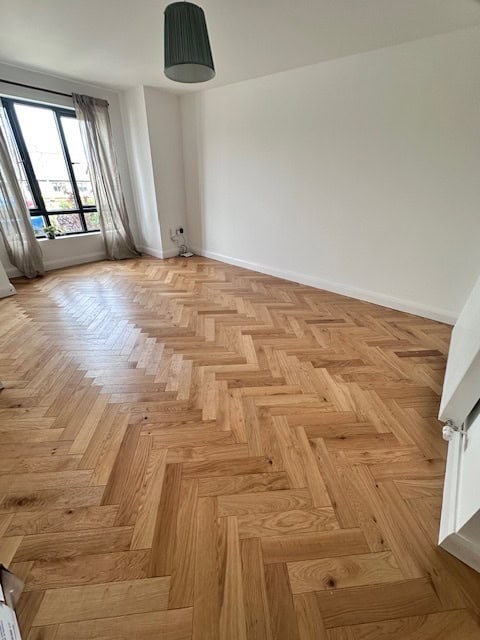
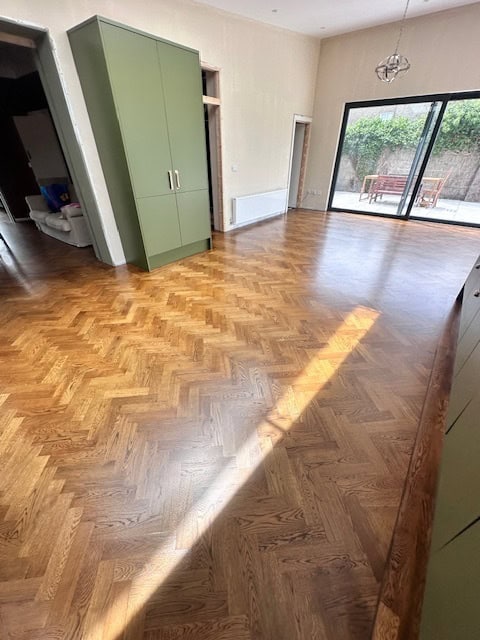
Yes, and when done correctly, parquet floors can look stunning after restoration.
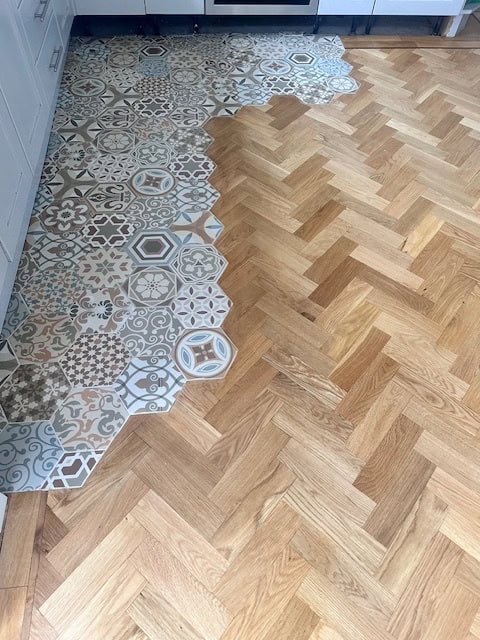
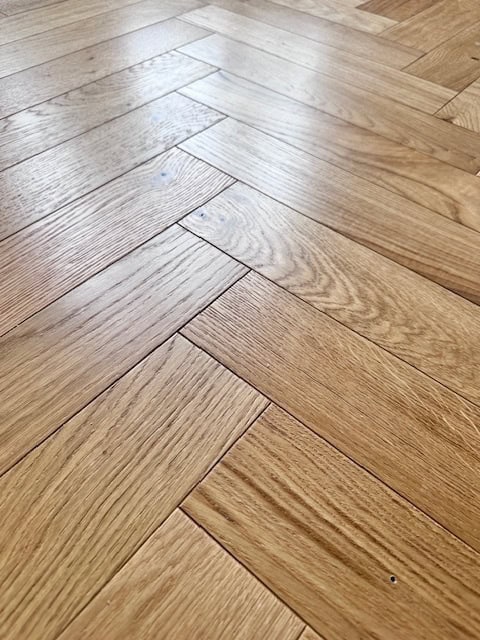
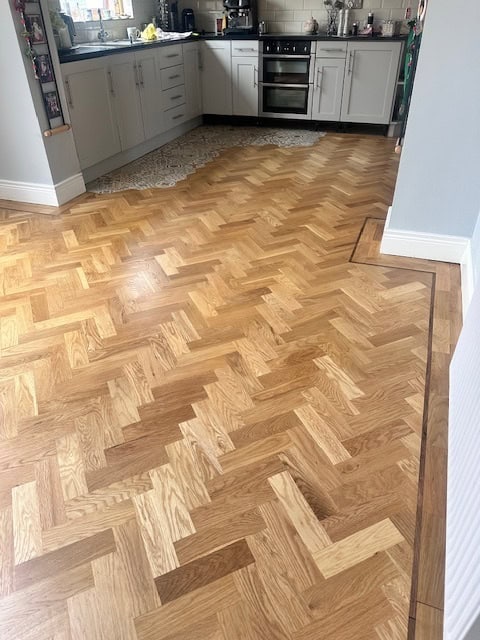
However, parquet requires specialist techniques to protect patterns such as herringbone or basketweave. Improper sanding can flatten or blur the design. That’s why professional parquet sanding is strongly recommended.
How soon can I walk on my floors after sanding?
Light foot traffic is possible within 24 hours, depending on the finish used. However, heavy furniture and rugs may need to wait several days so the finish can fully cure.
MM Parquet provides aftercare instructions to ensure your newly restored floors last for years.
Gallery